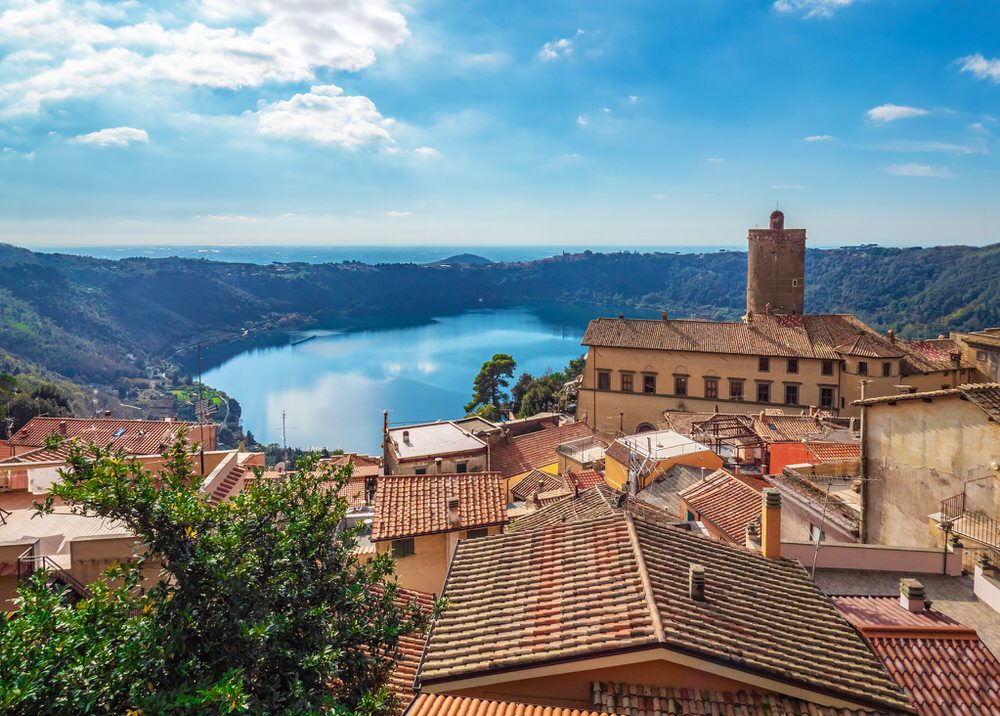
Lazio is one of Italy’s most rewarding regions to explore, offering an extraordinary mix of ancient ruins, natural beauty, and historic towns. While Rome anchors the region as one of the world’s great cultural capitals, Lazio extends far beyond the Eternal City, revealing landscapes and destinations that feel timeless, authentic, and deeply Italian.
Any visit to Lazio begins in Rome, a city layered with over two millennia of history. Iconic landmarks such as the Colosseum, Roman Forum, and Pantheon coexist with Renaissance and Baroque masterpieces like St. Peter’s Basilica and the Trevi Fountain. Neighborhoods such as Trastevere and Testaccio offer a more local rhythm, where narrow streets, traditional trattorias, and lively piazzas reflect daily Roman life.
Enclosed within Rome but distinct in identity, Vatican City is the spiritual center of the Catholic world. Visitors are drawn to St. Peter’s Basilica, the Vatican Museums, and the Sistine Chapel, where Michelangelo’s ceiling remains one of humanity’s greatest artistic achievements. Even for non-religious travelers, the art and architecture make this a must-see destination.
Just east of Rome, Tivoli is home to two UNESCO World Heritage Sites. Hadrian’s Villa (Villa Adriana) showcases the grandeur of ancient Roman imperial life, while Villa d’Este is famed for its elaborate Renaissance fountains and terraced gardens. Together, they offer a peaceful escape into art, history, and landscape design at its finest.
North of Rome, Viterbo is one of Lazio’s best-preserved medieval cities. Its historic center features stone palaces, narrow streets, and the Papal Palace, where popes once resided during periods of instability in Rome. Nearby thermal springs, used since Roman times, make the area especially appealing for relaxation and wellness tourism.
Perched dramatically atop a crumbling volcanic plateau, Civita di Bagnoregio is one of Italy’s most striking villages. Accessible only by a pedestrian bridge, the town feels frozen in time. Erosion threatens its future, earning it the nickname “the dying city,” yet its beauty, quiet streets, and panoramic views make it unforgettable.
Lazio’s volcanic lakes provide natural beauty and tranquility. Lake Bracciano, near Rome, is surrounded by medieval towns and overlooked by the impressive Orsini-Odescalchi Castle. Farther north, Lake Bolsena is the largest volcanic lake in Europe, known for its clear waters, lakeside villages, and relaxed pace—ideal for swimming, boating, and summer retreats.
The Castelli Romani area, a cluster of hill towns south of Rome, has long served as a countryside escape for Romans. Towns like Frascati, Castel Gandolfo, and Albano Laziale are known for wine, food, and sweeping views over vineyards and Lake Albano. Castel Gandolfo also hosts the Papal Palace, traditionally the pope’s summer residence.
For a glimpse into daily life in ancient Rome, Ostia Antica offers remarkably preserved ruins of the empire’s former port city. Farther along the coast, towns like Sperlonga and Gaeta combine beaches with historic centers, blending seaside relaxation with cultural exploration.
What makes Lazio special is its range: monumental cities, forgotten villages, volcanic landscapes, and coastal beauty all exist within a relatively compact region. Whether drawn by history, art, food, or nature, travelers find that Lazio rewards curiosity at every turn—offering not just famous sights, but moments of quiet wonder that linger long after the journey ends.