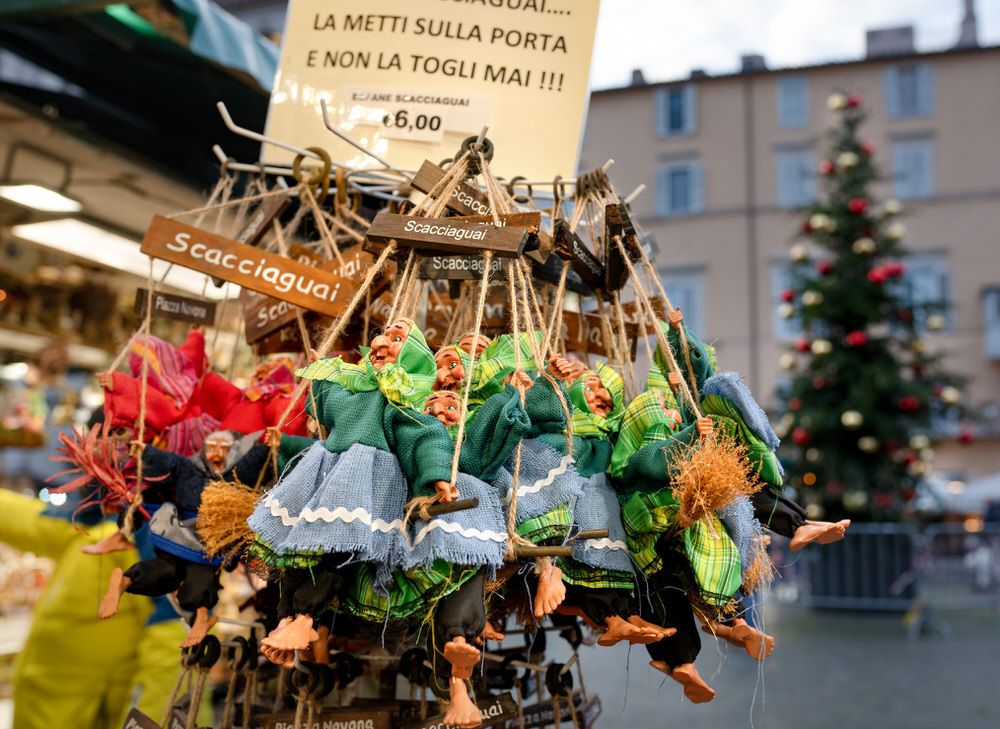
L'articolo parla della Befana e della sua tradizione nella cultura italiana. L'autrice ricorda che suo padre diceva sempre che, quando era piccolo, ricevere un'arancia in regalo era una cosa fortunata e meravigliosa. Suo padre era nato nel 1915 in Abruzzo, dove non crescevano le arance. Quindi, questo regalo rappresentava una vera gioia in quei tempi di povertà. L'autrice spiega che la Befana è una strega che porta frutta, dolci e regali ai bambini. La Befana arriva il giorno dell'Epifania, il 6 gennaio. Ogni anno, la Befana cerca Gesù Bambino. Non sapendo dove si trovi, lascia questi regali a tutti i bambini italiani.
"We were so poor, I would maybe be given an orange on Christmas, and I felt lucky to get it." Those were my father’s words on many Christmases. He seemed to marvel at his good fortune, via hours of physically demanding bricklaying work, to be able to give his four kids gifts on Christmas.
I never thought twice about asking for any toy I saw repeatedly advertised on Saturday morning cartoons. I started begging for my desired prize months ahead of time. I usually got a dress from my aunt, one other needed clothing item, and at least one toy, plus little gifts from my siblings. We lived in a comfortable house with a big yard and garden, so we ate well, but were definitely working class. Frivolous gifts like the cool, but very impractical white vinyl gogo boots I wanted in the mid-60s never came.
An orange? I wondered how poor you had to be to think an orange was a great Christmas gift. I wish I could go back and see what my dad's life in Italy was like to fully appreciate mine now. He was born in 1915 in Poggio di Roio in the Abruzzo region of Italy, a place where oranges do not generally grow. That orange was probably said to be delivered by La Befana, who I knew little about until a few years ago. I found info on her at a number of websites explaining her tradition in Italy.
The tale of La Befana begins on the 12th day of Christmas, which is January 5. "La Befana is the oldest, and most popular figure to come during Christmas in Italy. She dates back to approximately 1,000 years ago and her legend probably started before that with the pagans celebrating the winter solstice, then continued with the ancient Romans. Their belief was that witches flew over their fields to help crops grow. Later those beliefs were combined with Catholicism.
The name La Befana may have come from the word, Epifania, Italian for Epiphany. Many think it also means old witch because La Befana is definitely not a looker. The story goes that the Three Wise Men were guided by a star to visit newborn Jesus. They were carrying gifts of gold, frankincense, and myrrh. As they continued on their journey they grew weary. The three Maji came across La Befana, a woman who lived in a small village. They rested in her home and told her their story of the Christ child. They asked her to join them but La Befana, broom in hand, refused, explaining that she had cleaning and other housework to do. She sounds a little too much like me.
The next morning, she regretted her decision and set out on a journey to find the Three Wise Men and baby Jesus but was unable to find them. As a result, each year on Epiphany, La Befana flies on her broomstick all across Italy to find baby Jesus. She wears a black shawl and her clothes are covered in soot because she comes down the chimney looking at each home for the Christ child. This is why Italian children leave stockings hanging on the fireplace mantle. To children who've been good, she brings gifts, fruit, and candy. In contrast, the children who’ve been bad receive coal, garlic, and onions.
So, apparently La Befana was a serious cleaner with a poor sense of direction. That means she and I have even more in common. If we were ever lost (in the days before Google Maps) my ex used to ask me which way I thought we should go. I'd tell him and he'd go the opposite way, which was, sadly, usually the right way.
So, La Befana, I’m sending belated thanks for my impoverished dad's orange all those years ago. I celebrate you, your hardworking broom, your generosity, and completely understand when it comes to your sense of direction. Buona Epifania, or as they say in Italy, 'L'Epifania tutte le feste porta via' (Epiphany takes all holidays away).