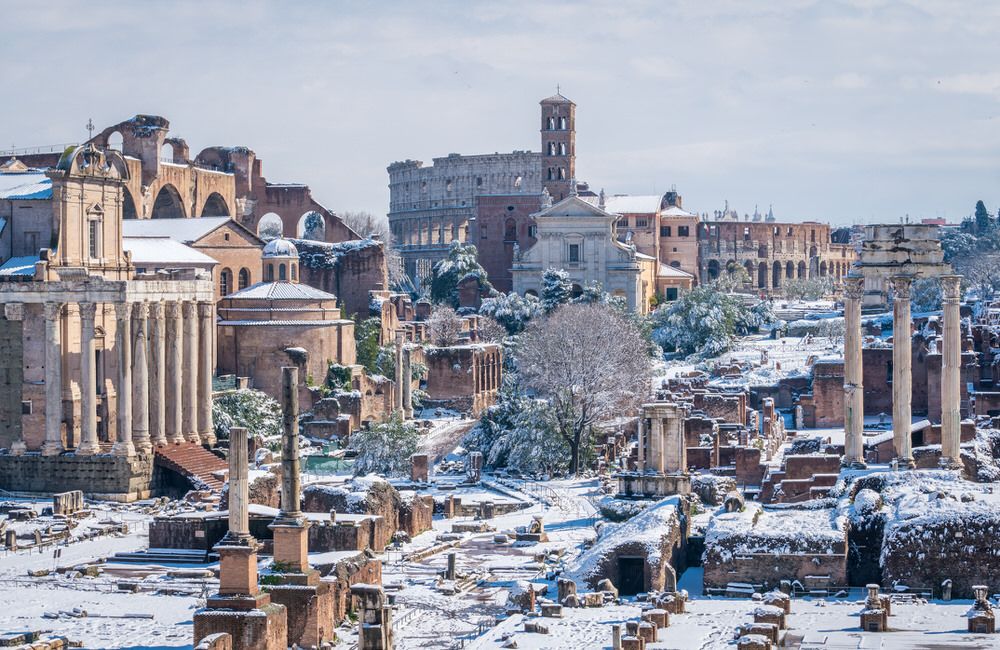
L'articolo descrive l'inverno in Italia, in particolare nelle città turistiche. In queste città, come Firenze e Roma, gli abitanti godono di giornate più tranquille e meno affollate. Questa stagione offre anche diverse ricette di piatti tipici, come la ribollita e le lenticchie. Il clima invernale varia lungo la penisola: si trova neve mentre al sud è più mite. Ci sono tante tradizioni natalizie e, alla fine dell'inverno, il famoso Carnevale. Per l'Italia, l'inverno è una stagione tranquilla ma sempre bella.
When winter settles over Italy, the country reveals a more intimate version of itself. The summer crowds thin, the light softens, and daily life slows to a pace that feels closer to how Italians themselves experience their country. Far from being an off-season afterthought, winter in Italy is a cultural moment, rich with ritual, food, and regional character.
In winter, Italian cities breathe. Rome’s piazzas echo rather than roar, Florence’s museums invite lingering rather than rushing, and Venice, often overwhelmed in warmer months, feels contemplative, wrapped in fog and reflected light. This quieter rhythm allows long-held traditions to surface. Cafés become refuges, where locals stand at the bar for espresso and conversation, while evenings stretch into unhurried dinners.
Winter is also when community matters most. Small towns come alive with local festivals, saint days, and food fairs, many of which are rarely designed for tourists. These gatherings are less about spectacle and more about continuity. Neighbors meeting year after year to celebrate what defines them.
Italian winter cuisine is rooted in warmth and substance. Across the country, dishes grow heartier, reflecting both climate and history. In the north, polenta, risotto, and slow-braised meats dominate the table. In Emilia-Romagna, fresh pasta is filled and layered – tortellini in broth, lasagna rich with ragù – often prepared collectively by families during the colder months.
Central Italy leans into legumes and soups: ribollita in Tuscany, lentil stews in Umbria, and chickpea-based dishes along the Tyrrhenian coast. In the south, winter brings citrus to the forefront with blood oranges, lemons, and mandarins brightening markets and kitchens, balancing heavier fare.
Food in winter is not just nourishment; it is a cultural anchor. Recipes passed down through generations are most often cooked now, when time allows and the need for warmth makes them meaningful.
Italy’s geography gives winter many faces. In the Alps and Dolomites, snow reshapes villages into postcard scenes, and skiing coexists with deep-rooted mountain traditions, from woodcarving to seasonal herding rituals. In contrast, coastal regions like Liguria or Sicily experience mild winters, where the sea remains central to daily life and fishermen continue their routines largely unchanged.
The countryside, stripped of summer abundance, becomes stark and poetic. Vineyards lie dormant, olive groves glisten with frost, and the land seems to rest; an essential pause in the agricultural cycle that has shaped Italian culture for centuries.
Winter in Italy is inseparable from its religious calendar. Christmas remains deeply traditional, marked by elaborate nativity scenes (presepi) that range from simple family displays to entire villages recreating biblical landscapes. In Naples, the art of the presepe becomes a cultural statement, blending sacred figures with contemporary Italian life.
The season culminates in Carnevale, especially in Venice, where masks and costumes transform the city into a living theater. While famous worldwide, Carnevale also reflects a deeper cultural impulse: the temporary suspension of social roles, a moment of play before the sobriety of Lent.
Perhaps the greatest cultural gift of an Italian winter is its sense of authenticity. Without the pressure of performance, Italy feels lived-in rather than displayed. Conversations last longer, meals stretch late into the evening, and places reveal themselves gradually.
Winter shows Italy not as a postcard, but as a home – complex, regional, and deeply rooted in tradition.
It is a season for listening rather than looking, for understanding rather than consuming. And for those willing to embrace its quieter beauty, winter offers one of the most genuine ways to experience Italian culture.