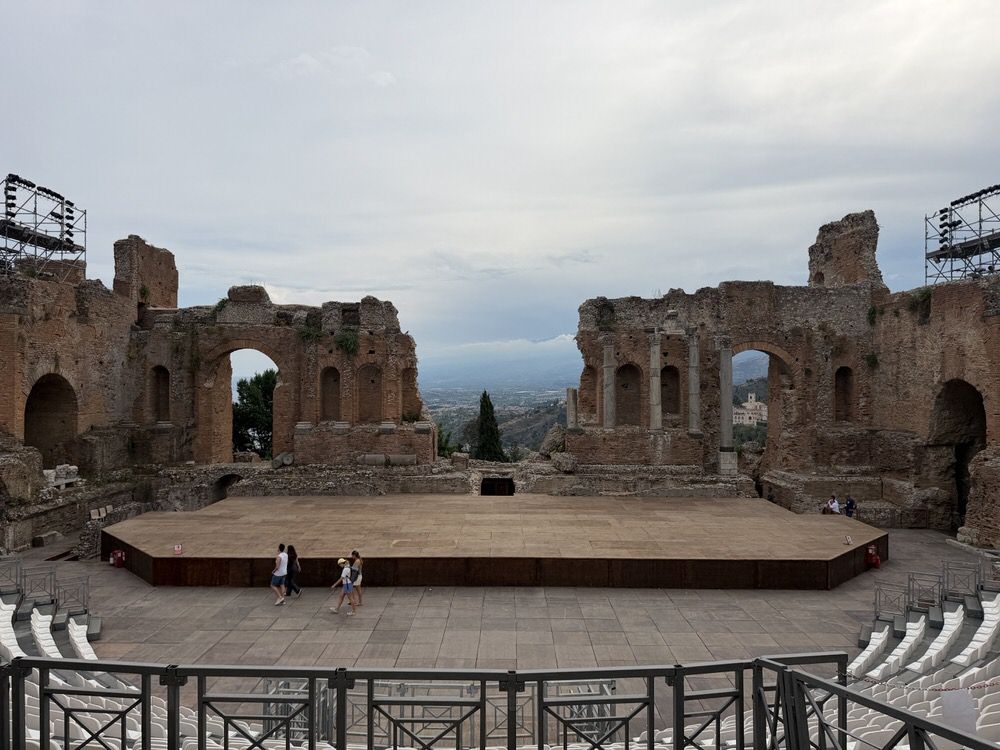
Perched high on a hillside overlooking the sparkling Ionian Sea, the Greek Theatre of Taormina is one of Sicily’s most breathtaking landmarks. With panoramic views of Mount Etna, the Bay of Naxos, and the Sicilian coastline, the ancient theater is more than an archaeological treasure; it is a place where history, culture, and natural beauty come together in spectacular fashion.
For more than 2,000 years, this remarkable amphitheater has welcomed audiences, first for Greek dramas, later for Roman spectacles, and today for concerts, operas, and international film festivals. Few historic sites in the world continue to serve the same purpose for which they were built, making the Greek Theatre of Taormina one of Italy’s most extraordinary cultural landmarks.
The theater was originally constructed during the 3rd century BC, when Sicily formed part of the Greek world known as Magna Graecia. The Greeks carefully selected the hillside location, taking advantage of the natural slope to create seating while framing one of the most spectacular backdrops imaginable.
When the Romans gained control of Sicily centuries later, they expanded and remodeled the theater. The stage was enlarged, new architectural features were added, and the venue was adapted for gladiatorial contests and public entertainment. Despite these changes, the theater retained much of its original Greek character, preserving a remarkable blend of two great ancient civilizations.
Today, visitors can still walk through stone passageways, climb the ancient seating, and imagine audiences gathering beneath the Sicilian sky more than 2,000 years ago.
While many ancient theaters boast impressive architecture, few can rival the setting of Taormina’s.
From the upper rows, visitors enjoy sweeping views of the deep blue Mediterranean, the crescent-shaped Bay of Naxos, and the towering silhouette of Mount Etna, Europe’s tallest active volcano. Depending on the season, Etna may be capped with snow even as the coastline below basks in warm sunshine.
The scenery changes throughout the day. Morning light illuminates the volcanic slopes, afternoon sun casts brilliant colors across the sea, and sunset transforms the landscape into shades of gold, orange, and violet. It is easy to understand why generations of artists, photographers, and writers have been inspired by this unforgettable panorama.
The theater measures approximately 400 feet across and could once accommodate as many as 10,000 spectators. Built with remarkable engineering skill, its semicircular seating rises gracefully above the stage, creating excellent acoustics that still impress performers today.
Visitors can explore the remains of the stage buildings, underground corridors, and seating sections while imagining ancient actors performing Greek tragedies by Sophocles and Euripides or Roman audiences cheering elaborate public spectacles.
The combination of classical architecture and dramatic scenery creates an atmosphere unlike any modern performance venue.
Unlike many archaeological sites that exist solely as historical monuments, the Greek Theatre remains an active cultural venue.
Each summer, it hosts an impressive calendar of performances, including classical music concerts, ballet, opera, theatrical productions, and contemporary artists from around the world. The theater also serves as one of the principal venues for the Taormina Film Festival, which has welcomed internationally acclaimed actors, directors, and filmmakers for decades.
Watching a live performance beneath the stars, surrounded by ancient stone and overlooking Mount Etna, is an experience many visitors describe as unforgettable.
The theater is only one reason to visit Taormina, one of Sicily’s most beloved towns. Just beyond the archaeological site, visitors can wander along Corso Umberto, the town’s elegant pedestrian street lined with boutiques, cafés, artisan shops, and historic churches.
Flower-filled piazzas, colorful balconies, and inviting trattorias create an atmosphere that perfectly complements the town’s rich history. Nearby beaches, accessible by cable car or winding roads, offer crystal-clear waters ideal for swimming and relaxation after a day of sightseeing.
Taormina’s blend of history, luxury, and natural beauty has attracted travelers for centuries, including writers, painters, royalty, and Hollywood celebrities.
The best time to visit the Greek Theatre is early in the morning or late in the afternoon, when temperatures are cooler and the lighting is ideal for photography. Summer evenings are especially magical if you have the opportunity to attend a concert or theatrical performance.
Comfortable walking shoes are recommended, as the ancient stone steps can be uneven. Bringing water, sun protection, and a camera is essential! You’ll want to capture the theater’s extraordinary views from every angle.
Allow at least two hours to explore the site thoroughly, with additional time to enjoy the cafés, shops, and scenic overlooks throughout Taormina.
The Greek Theatre of Taormina stands as a testament to the civilizations that shaped Sicily and to the island’s enduring love of art, music, and storytelling. Through centuries of change, volcanic eruptions, wars, and natural disasters, it has remained a gathering place where people come together to celebrate culture.
Whether you’re captivated by ancient history, inspired by magnificent landscapes, or simply seeking one of Italy’s most memorable destinations, the Greek Theatre offers an experience that lingers long after your visit ends.
As the sun sets behind Mount Etna and the first stars appear over the Mediterranean, it becomes clear why this remarkable theater continues to enchant visitors more than two millennia after its construction. In Taormina, history is not confined to the past, it is alive on a stage overlooking one of the world’s most beautiful views.