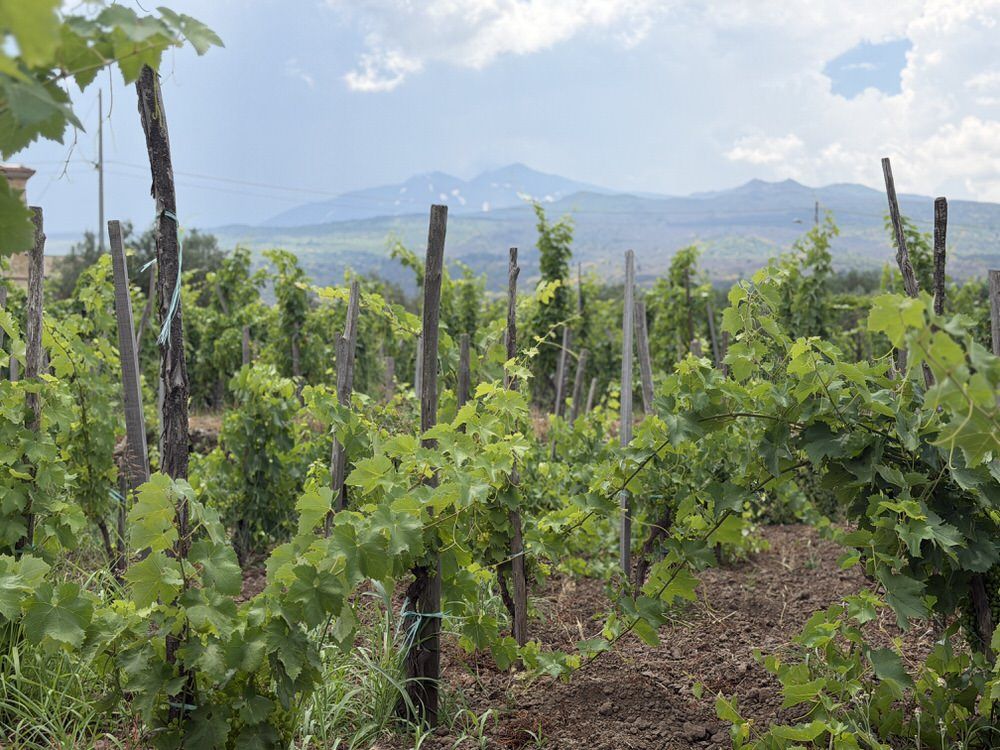
L’Etna è molto più del vulcano simbolo della Sicilia: è il cuore pulsante di una delle regioni vinicole più straordinarie d’Italia. Sui fertili pendii vulcanici che circondano Catania, antiche colate laviche, terreni ricchi di minerali e le fresche altitudini montane creano le condizioni ideali per produrre vini eleganti e unici al mondo.
Dal rinomato Nerello Mascalese al fresco e aromatico Carricante, fino ai vigneti secolari radicati nella terra vulcanica, i vini dell’Etna raccontano lo straordinario legame tra natura e tradizione. Scopri come il vulcano più attivo d’Europa abbia trasformato le sfide della natura in uno dei più grandi tesori enogastronomici della Sicilia.
Rising more than 11,000 feet above Sicily’s eastern coast, Mount Etna is Europe’s tallest and most active volcano. For centuries, its eruptions have reshaped the landscape around Catania, covering the countryside with lava and volcanic ash. While these dramatic displays of nature have occasionally threatened nearby communities, they have also created one of Italy’s most distinctive and celebrated wine regions.
Today, the vineyards that blanket Etna’s slopes produce wines prized by sommeliers and collectors around the world. The combination of volcanic soil, high elevations, Mediterranean sunshine, and cool mountain breezes gives these wines a character found nowhere else. In the Catania region, the volcano is not merely part of the scenery; it is the foundation of a thriving wine culture.
The Etna wine region stretches across the northern, eastern, and southern slopes of the volcano, where vineyards climb to elevations exceeding 3,000 feet. Unlike many Mediterranean wine regions, where hot temperatures can challenge grape growing, Etna’s altitude creates dramatic shifts between warm days and cool nights.
These temperature swings allow grapes to ripen slowly while preserving their natural acidity and developing complex aromas. The result is wines that combine richness with remarkable freshness and elegance.
Beneath the vines lies soil unlike any other. Layers of ancient lava flows, volcanic ash, basalt, pumice, and mineral-rich rock provide excellent drainage while forcing grapevines to send their roots deep into the earth. These challenging growing conditions naturally limit yields, concentrating flavors in every grape.
Each eruption subtly alters the landscape, creating a patchwork of vineyard sites with distinct soil compositions. Local winemakers often describe Etna not as a single wine region, but as a collection of unique microclimates, each producing wines with its own personality.
The star of Etna’s red wines is Nerello Mascalese, an indigenous grape that has grown on the volcano for centuries. Often compared to Pinot Noir or Nebbiolo for its elegance and complexity, Nerello Mascalese produces wines with bright cherry and raspberry flavors, floral aromas, vibrant acidity, and refined tannins. As the wines age, they often develop earthy notes, hints of herbs, and a distinctive mineral character that many believe reflects the volcanic soil.
The grape is frequently blended with Nerello Cappuccio, which contributes color, softness, and subtle spice while preserving the wine’s balance.
For white wines, the dominant variety is Carricante, another native Sicilian grape. Grown primarily on Etna’s eastern slopes, Carricante produces crisp, aromatic wines with notes of citrus, green apple, white flowers, and Mediterranean herbs. High natural acidity allows these wines to age gracefully, developing additional layers of complexity over time.
Other traditional varieties, including Catarratto and Minnella, also contribute to the region’s diverse wine portfolio.
What makes Etna wines so distinctive is the mountain itself.
Volcanic soils contribute abundant minerals while remaining naturally porous, preventing water from pooling around vine roots. Frequent breezes flowing down the mountain reduce humidity and help keep vineyards healthy. Meanwhile, the volcano’s varying elevations create dozens of small growing zones, each with slightly different temperatures, rainfall, and sun exposure.
Winemakers often speak of “contrade” – historic vineyard districts that function much like the famed crus of Burgundy. Wines from neighboring contrade can display surprisingly different characteristics despite being separated by only a short distance.
This remarkable diversity has helped establish Etna as one of Italy’s most exciting terroir-driven wine regions.
Many vineyards surrounding Catania contain vines that are 80 to 100 years old, with some exceeding 150 years of age. Because Etna’s volcanic soils were largely spared from the phylloxera epidemic that devastated much of Europe’s vineyards in the late 19th century, many of these vines remain on their original rootstock.
The old vines produce fewer grapes, but those grapes offer exceptional concentration and complexity. Combined with careful vineyard management and modern winemaking techniques, they have elevated Etna wines to international acclaim.
Over the past two decades, a new generation of winemakers has embraced sustainable farming, minimal intervention in the cellar, and a renewed focus on indigenous grape varieties. Their dedication has transformed Etna into one of Italy’s most dynamic wine destinations.
For travelers exploring eastern Sicily, the vineyards surrounding Mount Etna provide unforgettable experiences. Scenic wine roads wind through lava stone villages, terraced vineyards, orchards, and forests that climb the volcano’s slopes.
Many wineries welcome visitors for guided tours, vineyard walks, and tastings that pair local wines with regional specialties such as Sicilian cheeses, cured meats, olive oil, pistachios from nearby Bronte, and traditional pasta dishes.
Towns such as Linguaglossa, Randazzo, Castiglione di Sicilia, and Milo serve as ideal gateways to the Etna wine region, offering charming accommodations, family-run restaurants, and panoramic views of the surrounding countryside.
The experience is unlike visiting most wine regions. On the same day, travelers can hike across ancient lava fields, explore volcanic craters, and enjoy a glass of elegant Nerello Mascalese while overlooking vineyards that have flourished for generations in the shadow of an active volcano.
The wines of the Catania region tell the story of resilience, adaptation, and the enduring relationship between people and nature. Every bottle reflects the power of Mount Etna; not through dramatic eruptions alone, but through the rich volcanic soil, cool mountain air, and centuries of careful cultivation that have shaped this extraordinary landscape.
As international recognition continues to grow, Etna has earned a place among the world’s premier wine regions. Yet despite its rising reputation, the vineyards remain deeply connected to Sicilian tradition, where families have worked the same volcanic hillsides for generations.
To taste an Etna wine is to experience Sicily itself: bold yet refined, ancient yet vibrant, and forever shaped by the mountain that both challenges and sustains life on its fertile slopes.
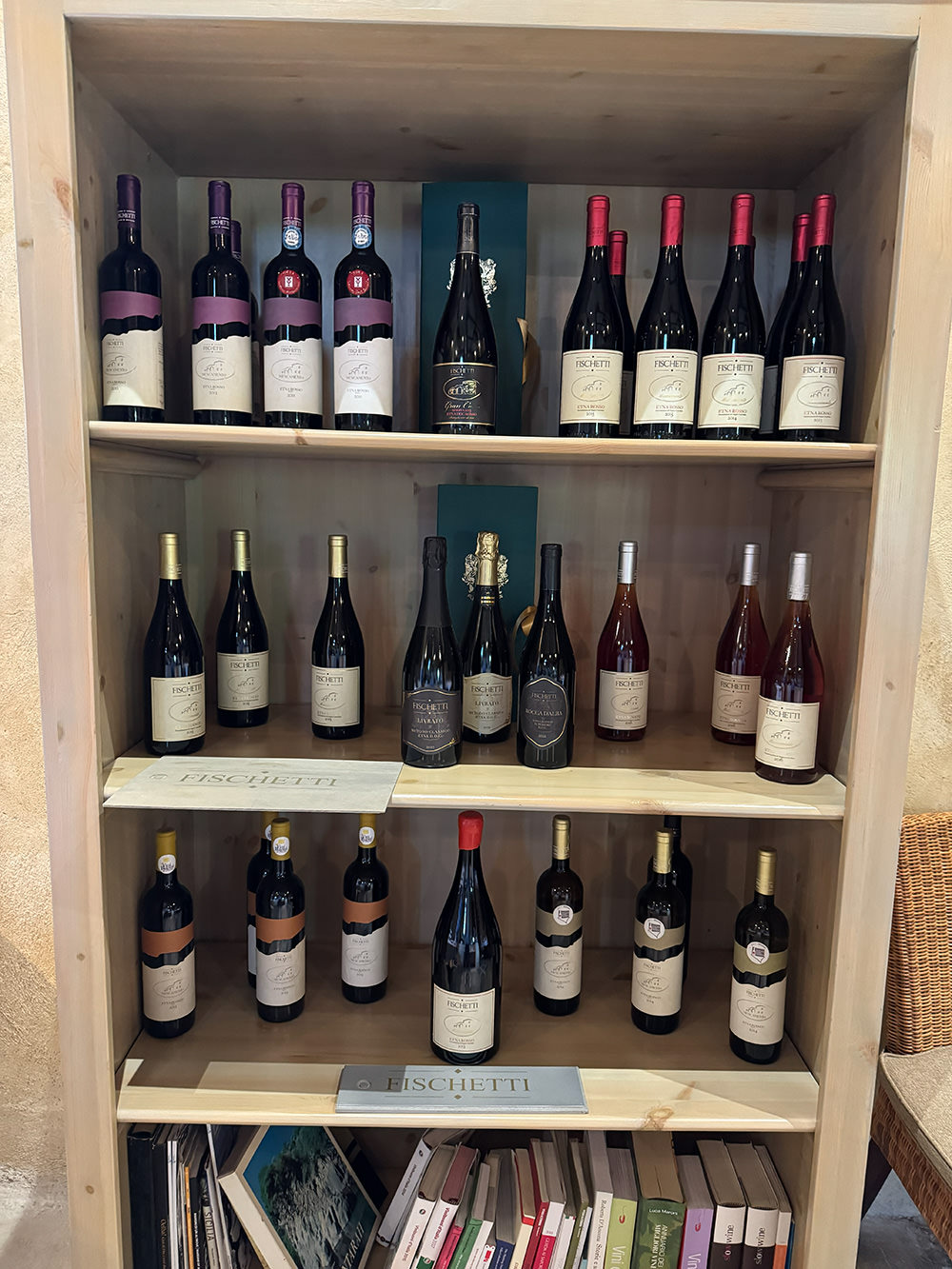
Fischetti Winery in Sicily