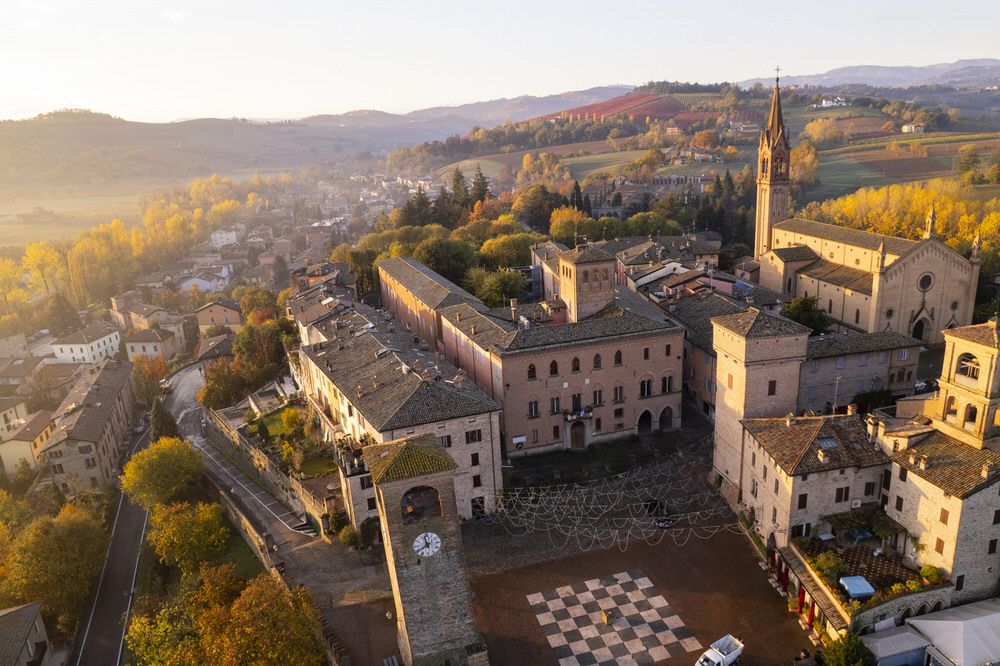
Stretching from the Apennine Mountains to the Adriatic Sea, Emilia-Romagna is one of Italy’s most captivating regions, celebrated for its extraordinary cuisine, historic cities, artistic treasures and welcoming way of life. Located in northern Italy, the region combines medieval charm with modern innovation, offering visitors an authentic taste of Italian culture.
The region takes its name from two historic territories: Emilia, associated with the ancient Roman Via Aemilia, and Romagna, which has its own distinctive traditions. Its capital, Bologna, is famous for its medieval architecture, covered porticoes and prestigious university. Throughout Emilia-Romagna, historic landmarks, fertile farmland and picturesque countryside reflect a rich cultural heritage.
Bologna is affectionately known as la dotta, la rossa e la grassa – the learned, the red and the fat. These nicknames celebrate its historic university, terracotta-colored buildings and celebrated culinary traditions. Traditionally dated to 1088, the University of Bologna is widely recognized as the oldest university in the Western world.
The city’s historic center features lively piazzas, medieval towers and miles of covered walkways. Its porticoes were designated a UNESCO World Heritage property in 2021. Piazza Maggiore and the Basilica of San Petronio are among its most recognizable landmarks.
Bologna is also famous for tagliatelle al ragù, a rich meat sauce traditionally served with fresh egg pasta. Food markets, specialty shops and family-run trattorias offer visitors opportunities to experience the region’s culinary traditions.
Emilia-Romagna is internationally renowned for its food. Parma is the birthplace of Parmigiano Reggiano cheese and Prosciutto di Parma, products celebrated for their distinctive flavors and traditional production methods. The city also boasts impressive Romanesque architecture and a strong musical heritage associated with composer Giuseppe Verdi.
Nearby Modena is known for traditional balsamic vinegar, carefully aged in wooden barrels, as well as tortellini and other regional specialties. The city is also at the heart of Italy’s Motor Valley, home to prestigious automotive names such as Ferrari and Maserati. Visitors can explore the area’s automotive museums and discover the engineering and design traditions behind these iconic brands.
Ravenna is one of Italy’s most remarkable destinations for art lovers. Once the capital of the Western Roman Empire, the city became an important center of Byzantine culture. Its UNESCO-listed early Christian monuments feature extraordinary mosaics, with intricate designs and brilliant colors that have survived for centuries. The Basilica of San Vitale and the Mausoleum of Galla Placidia are among its most celebrated sites.
Ferrara offers a different historical experience. Shaped by the powerful Este family during the Renaissance, the city is known for its imposing Castello Estense, Renaissance palaces and historic defensive walls. Its flat landscape and scenic streets also make it an appealing destination for cycling.
Emilia-Romagna’s attractions extend beyond its historic cities. Rimini is one of Italy’s best-known seaside resorts, attracting visitors with sandy beaches, restaurants and a lively summer atmosphere. The city also preserves important Roman landmarks, including the Arch of Augustus and the Tiberius Bridge.
Nearby destinations such as Riccione and Cattolica offer additional opportunities for seaside relaxation, family holidays and waterfront dining. Inland, rolling hills, vineyards and historic villages provide a quieter contrast to the busy coast.
Food remains central to Emilia-Romagna’s identity. Traditional dishes include tortellini, lasagne verdi, tagliatelle al ragù and piadina, a thin flatbread often filled with cheese, cured meats or vegetables. Recipes and specialties vary across the region, making culinary exploration an important part of any visit.
Wine is equally significant. Lambrusco, a family of sparkling red wines associated particularly with the Modena and Reggio Emilia areas, pairs well with local dishes. Sangiovese is another notable wine, especially in Romagna.
From the Apennines to the Adriatic, Emilia-Romagna offers opportunities for hiking, cycling, sightseeing and culinary adventures. Its combination of historic architecture, agricultural traditions, artistic treasures and modern industry makes it one of Italy’s most diverse regions.
Whether admiring Ravenna’s mosaics, exploring Bologna’s porticoes, sampling local cheese in Parma or enjoying a sunset along the Adriatic coast, visitors discover a region where tradition remains an essential part of everyday life. Emilia-Romagna invites travelers to experience Italy slowly – one historic city, welcoming village and memorable meal at a time.