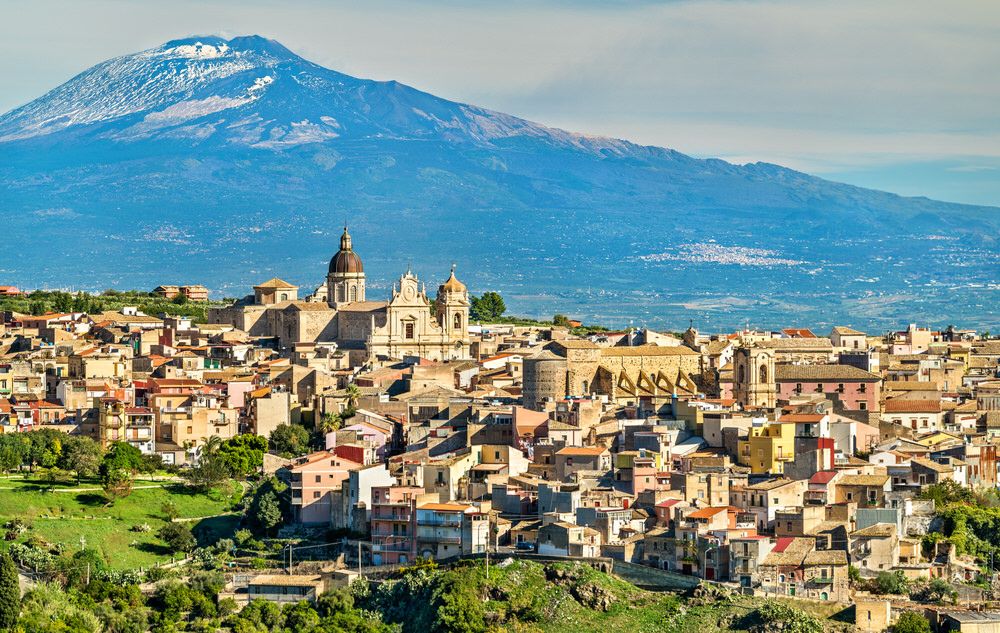
On Sicily’s eastern coast, where the Ionian Sea meets the towering slopes of Mount Etna, lies Catania, a city that perfectly balances ancient history, Baroque elegance, and modern Sicilian life.
Often overshadowed by its glamorous neighbor, Taormina, Catania offers visitors an authentic experience filled with bustling markets, world-class cuisine, volcanic landscapes, and centuries of fascinating history.
Few cities in Europe have been shaped by nature as dramatically as Catania. Sitting at the foot of Mount Etna, Europe’s tallest and most active volcano, the city has endured numerous eruptions and earthquakes throughout its history. The most devastating came in 1669, when lava from Etna flowed through portions of the city, followed just 24 years later by the catastrophic earthquake of 1693.
Rather than abandon their home, the people of Catania rebuilt. The result is one of the finest collections of Sicilian Baroque architecture in the world. Constructed primarily from dark volcanic lava stone contrasted with bright limestone, the city’s buildings possess a striking appearance unlike anywhere else in Italy. Today, Catania’s historic center is recognized as a UNESCO World Heritage Site as part of the “Late Baroque Towns of the Val di Noto.”
Every visit to Catania begins in Piazza del Duomo, the city’s vibrant central square. Here stands the magnificent Cathedral of Saint Agatha, dedicated to Catania’s beloved patron saint, whose annual feast each February is one of the largest religious celebrations in Italy.
At the center of the piazza is Catania’s most recognizable symbol, the Fontana dell’Elefante (Elephant Fountain). Carved from black lava stone and topped with an ancient Egyptian obelisk, the smiling elephant, affectionately known as “Liotru,” has become an enduring emblem of the city’s resilience.
Nearby, visitors can stroll along Via Etnea, Catania’s elegant main boulevard lined with cafés, boutiques, churches, and sweeping views of Mount Etna rising dramatically in the distance.
Mount Etna dominates both the skyline and the culture of eastern Sicily. Rising more than 11,000 feet, the volcano continually reshapes the landscape while enriching it with fertile volcanic soil.
Visitors can take guided excursions to Etna’s craters, hike across ancient lava fields, or ride cable cars higher up the mountain for breathtaking panoramic views. During the winter months, adventurous travelers can even ski on Etna’s slopes before enjoying dinner beside the Mediterranean that same evening – a rare experience found in few places on Earth.
The volcano also produces one of Italy’s fastest-growing wine regions. Vineyards planted in mineral-rich volcanic soil produce elegant reds made primarily from Nerello Mascalese grapes, as well as crisp white wines that have earned international acclaim.
Catania is a city where food is woven into everyday life. Its bustling fish market, La Pescheria, has operated for centuries and remains one of Sicily’s most colorful attractions. Vendors enthusiastically display the day’s fresh catch alongside swordfish, octopus, shellfish, and local produce. Local specialties include: pasta alla Norma, Catania’s signature dish featuring eggplant, tomato sauce, basil, and ricotta salata; arancini, golden fried rice balls filled with ragù, cheese, or pistachios; cipollina, a flaky pastry filled with onion, tomato, mozzarella, and ham; granita served with warm brioche, a beloved Sicilian breakfast during the summer months; and cannoli filled with sweet ricotta and often topped with pistachios grown on the fertile slopes of Mount Etna.
Dining in Catania reflects the island’s agricultural abundance, where citrus fruits, olives, almonds, pistachios, seafood, and locally produced cheeses appear on nearly every menu.
The greater Catania region offers countless opportunities for exploration.
Just under an hour north lies Taormina, perched high above the sea with its famous Greek Theatre overlooking Mount Etna. Inland, charming mountain villages such as Zafferana Etnea and Linguaglossa serve as gateways to Etna National Park and provide visitors with traditional Sicilian hospitality.
The Riviera dei Ciclopi, stretching north from Catania, features picturesque fishing villages including Aci Trezza and Aci Castello. According to Greek mythology, the dramatic black lava sea stacks offshore were hurled into the sea by the Cyclops Polyphemus during his battle with Odysseus.
Beach lovers will enjoy both sandy stretches south of the city and rocky volcanic coastlines where crystal-clear waters invite swimming, snorkeling, and diving throughout much of the year.
Perhaps no event captures the spirit of Catania better than the Feast of Saint Agatha. Each February, nearly a million pilgrims and visitors gather to honor the city’s patron saint through elaborate processions, fireworks, music, and centuries-old religious traditions. It is one of Italy’s largest and most moving expressions of faith and civic pride.
Throughout the year, open-air concerts, food festivals, and local markets celebrate Sicily’s rich cultural heritage, ensuring there is always something to experience beyond the city’s historic landmarks.
Catania offers something increasingly rare in modern travel: authenticity. It is a city where ancient ruins stand beside lively cafés, where black lava stone buildings glow beneath the Mediterranean sun, and where the presence of Mount Etna reminds visitors that nature remains both beautiful and powerful.
Whether you’re exploring Baroque streets, hiking volcanic trails, sampling fresh seafood in a bustling market, or sipping wine grown in volcanic soil, the Catania region reveals a Sicily that is vibrant, resilient, and unforgettable.
For travelers seeking history, adventure, exceptional cuisine, and genuine Sicilian culture, Catania is not simply a gateway to Mount Etna. It is one of Italy’s most rewarding destinations in its own right.