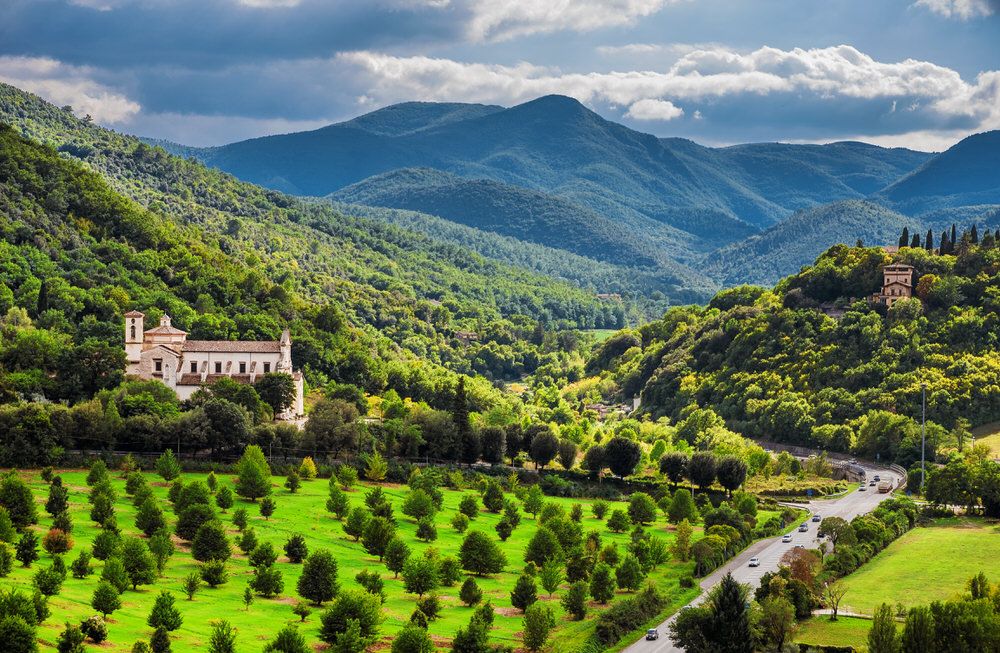
L’Umbria, spesso chiamata il “cuore verde d’Italia”, premia i viaggiatori che cercano profondità piuttosto che spettacolo. Situata discretamente tra la Toscana e il Lazio, questa regione senza sbocco sul mare offre una ricca combinazione di storia, spiritualità, cucina e bellezze naturali, senza le folle delle sue vicine più celebri. Le sue colline ondulate, gli uliveti e i borghi medievali creano un paesaggio che appare allo stesso tempo senza tempo e sereno, mentre boschi e laghi tranquilli contribuiscono al suo ritmo pacato.
La vita in Umbria scorre a un ritmo più lento, conservando un senso di autenticità sempre più raro. Città come Perugia e Assisi rivelano strati di storia attraverso strade in pietra, architetture antiche e tradizioni culturali durature. Allo stesso tempo, le profonde radici spirituali della regione—plasmate da figure come San Francesco—infondono alla vita quotidiana un senso silenzioso di riflessione.
Qui, la semplicità non è una limitazione ma una forza distintiva. Che si tratti della cucina rustica, dei paesaggi incontaminati o del carattere discreto, l’Umbria offre un’esperienza intima, autentica e duratura.
Umbria, often called the “green heart of Italy,” is a region that rewards travelers who prefer depth over spectacle. Landlocked and quietly positioned between Tuscany and Lazio, Umbria offers a rich blend of history, spirituality, cuisine, and natural beauty without the overwhelming crowds found in its more famous neighbors.
The landscape is one of Umbria’s defining features. Rolling hills ripple across the countryside, dotted with olive groves, vineyards, and medieval hill towns that seem frozen in time. Dense forests and tranquil lakes, including Lake Trasimeno, add to the region’s peaceful character. The absence of a coastline has, in many ways, preserved Umbria’s authenticity; life here moves at a slower, more deliberate pace.
Umbria’s towns and cities are steeped in history. Perugia, the regional capital, is a vibrant university city known for its Etruscan roots, medieval architecture, and lively cultural scene. Its historic center features narrow streets, stone arches, and sweeping views of the surrounding countryside. Assisi, perhaps Umbria’s most famous town, is revered as the birthplace of St. Francis. Its basilica, adorned with remarkable frescoes, draws pilgrims and art lovers alike. Other towns such as Orvieto, perched dramatically atop a volcanic rock cliff, and Spoleto, known for its arts festival, each contribute their own unique charm.
Spirituality runs deep in Umbria. The legacy of St. Francis has shaped not only Assisi but the entire region’s identity. Monasteries, hermitages, and quiet churches are scattered throughout the hills, inviting reflection and retreat. This spiritual atmosphere blends seamlessly with daily life, creating a sense of calm that visitors often find restorative.
Umbrian cuisine is rustic and deeply connected to the land. Unlike coastal regions, seafood plays a minor role; instead, the focus is on hearty, earthy ingredients. Truffles, especially the prized black truffle, feature prominently in local dishes. Handmade pastas, roasted meats, lentils from Castelluccio, and robust red wines define the culinary experience. Meals are simple yet intensely flavorful, often prepared using recipes passed down through generations.
Cultural traditions remain strong in Umbria. Festivals celebrating everything from jazz music to medieval jousting take place throughout the year. These events are not staged for tourists but are genuine expressions of local identity. The region’s artisans also maintain centuries-old crafts, from ceramics to textiles, preserving skills that might otherwise be lost.
What truly sets Umbria apart is its understated nature. It does not try to impress with grandeur. Instead, it draws visitors in with its quiet beauty, authenticity, and sense of continuity with the past. Whether wandering through ancient streets, savoring a truffle-laced meal, or simply taking in the view from a hillside, one quickly understands why Umbria holds such a special place in the Italian landscape.
For those seeking an Italy that feels intimate, timeless, and deeply rooted in tradition, Umbria offers an experience that lingers long after the journey ends.