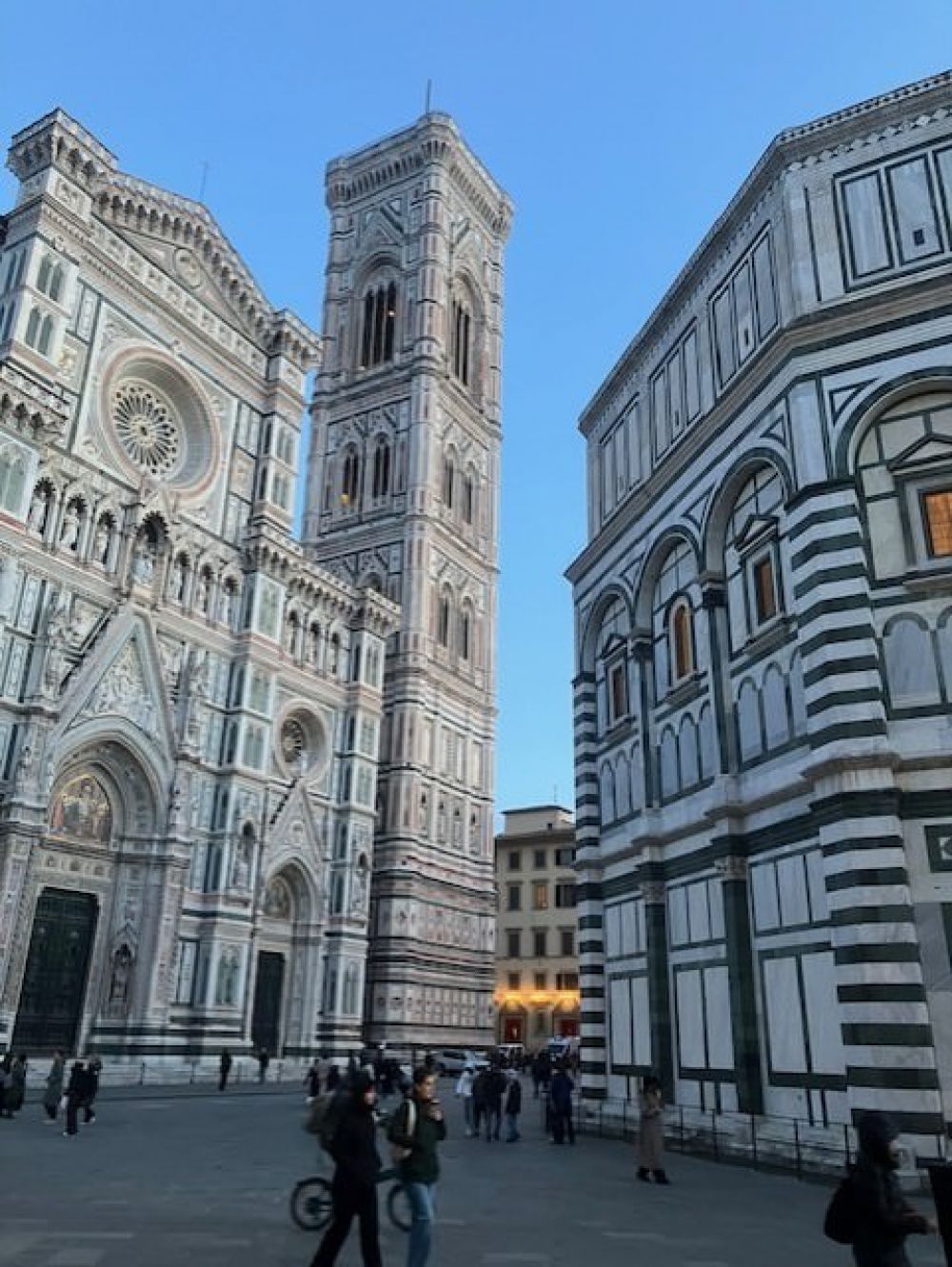
Esplorare Firenze lontano dalla folla rivela una città di straordinari contrasti, dove la bellezza rinascimentale, angoli nascosti e una storia stratificata si trovano appena oltre i percorsi più battuti. A sud dell’Arno, la chiesa sulla collina di San Miniato al Monte offre ampie vedute sulla città, insieme a uno straordinario artigianato medievale e a un cimitero tranquillo dove sono sepolte figure importanti, tra cui l’autore di Pinocchio.
Tornando nel centro storico, tesori meno conosciuti come Palazzo Medici Riccardi svelano lo splendore rinascimentale in spazi intimi, con affreschi riccamente dettagliati che fanno rivivere in modo vivido la Firenze dei Medici. Nelle vicinanze, trattorie tradizionali e bancarelle di street food offrono un assaggio della cucina locale, dai piatti tipici toscani al celebre e deciso lampredotto.
Proseguendo tra strade più tranquille, i visitatori incontrano capolavori artistici al Museo del Bargello, che ospita alcune delle opere più importanti di Donatello, spesso ammirate senza le consuete folle. A pochi passi, il Museo Zeffirelli offre un sorprendente e immersivo viaggio nel mondo del cinema e del teatro italiani.
Insieme, questi luoghi mostrano un volto diverso di Firenze—dove arte, storia e vita quotidiana si intrecciano. Oltre ai suoi monumenti iconici, la città rivela una storia più complessa, segnata non solo dal genio artistico ma anche dalle realtà, dalle difficoltà e dall’umanità della vita rinascimentale.
Tucked into the heart of the Dolomites inIf this is your first time in Florence, take advantage of mild weather and blue skies and head south of the Arno for the most perfect church in Florence, which also has the most perfect view of the city. San Miniato al Monte, built in 1090, has an exquisite green patterned marble façade, and a fanciful intarsia marble floor depicting birds, animals and signs of the zodiac. Don’t forget to profit from the fine weather by exploring the cemetery around the church. Wander amongst the family tombs and discover the burial place of Carlo Collodi, the author of Pinocchio. From this prime spot look across the roofs, domes and towers of Florence to plan the rest of your tour.
Some great but relatively unknown places are right in the center. The Palazzo Medici Riccardi, tucked away in a side street near the massive San Lorenzo Basilica has inside its chapel one of the greatest Renaissance treasures ever, the frescoes painted by Benozzo Gozzoli in 1459. The tiny space tells the story of a procession from Jerusalem to Bethlehem with the Medici and all the recognizable personalities of the time taking part, in sumptuous clothing. The procession winds its way round the chapel, even with half a horse continued round the corner on the next wall. The colors are jewel-like. It is sublime.
Time for lunch? Not far away is an authentic trattoria, the Antichi Cancelli on Via Faenza. With enthusiastic, attentive staff and a well-priced menu, it serves traditional dishes such as tempura brains! (As well as many other delicious better-known dishes.)
While on the subject of cucina povera (poverty food) you should look out for a hole-in-the-wall kitchen selling lampredotto on a side street south of the Duomo. Not for the faint-hearted, it is the fourth stomach of a cow, slow cooked in a spicy sauce and served inside a bread roll, very popular with locals.
Continuing south you’ll come to the Bargello on via Del Proconsolo. Thanks to the Teenage Mutant Ninja Turtles of the 1980s most people have heard of Donatello, but how many know just how great he was as a sculptor, creating the first bronze statue of David since the Romans? Less well-known is his David sculpted in marble made a decade earlier, or his Saint George. But the Bargello is also a fascinating insight into medieval life in Florence including elaborate suits of armour (even for Medici children) – and there’s nobody there on the lower floors!Just beyond the Bargello in Piazza San Firenze is the huge Museo Zeffirelli, devoted to this most famous of Italian film directors. You may feel, as I did, that there may be nothing much to see beyond photographs of film stars, but you’d be wrong. The visit was so immensely enjoyable that we could have stayed longer.
There are thousands of his sketches of film sets and scenery, costumes, and many wooden models made for the stage. Best of all, there are several rooms where you can sit totally immersed in one of his films, where walls, ceilings and floors show film clips which slip and slide across the surfaces while, in the case of the Maria Callas room, petals and leaves drift down and around the space to the glorious sound track.
The great film “Tea with Mussolini” is featured, but the fact that the film is semi-autobiographical isn’t well known. Franco Zeffirelli was abandoned outside a convent as a baby. The nuns gave their babies names based on the alphabet and as he was left on the day for Z he was named Zeffirelli. He was later cared for by a group of English ladies caught up in the war and unable to leave San Gimignano. They educated him, which accounts for his great love of Shakespeare. Later he joined a group of Scottish soldiers and helped an American film star (superbly played by Cher) to escape by rowing across a lake to Switzerland.
When you cross the Piazza della Signoria you are reminded of the cruelties as well as the glories of Renaissance Florence by seeing the spot where Savonarola was burnt at the stake. His demise was aided by the notorious Machiavelli who denounced him.
There are other lesser-known reminders. The Tabernacolo delle Stinche on via Ghibellina is all that remains of the infamous Stinche prison, the last stop of those condemned to death. Machiavelli himself, synonymous with deceit and cunning, was later imprisoned here, charged with conspiracy. He was tortured with the strappado, an instrument used to dislocate the shoulders.
Fortunately, there are other buildings in Florence devoted to works of charity. San Martino del Vescovo is a tiny church in the maze of lanes south of the Duomo. Apart from its significant frescoes depicting the charitable works of St Martin, it is still, even now, the meeting place of the Compagnia dei Buonomini (a company of 12 good men) who meet on Fridays to discuss support for the poor.
Exploring the lesser-known parts of Florence gives you a much more balanced picture of life there in the Renaissance. They achieved the greatest art the world had ever known, yet few realize that day-to-day life was precarious, and deceit and cruelty dwelt alongside the glory of Florence.
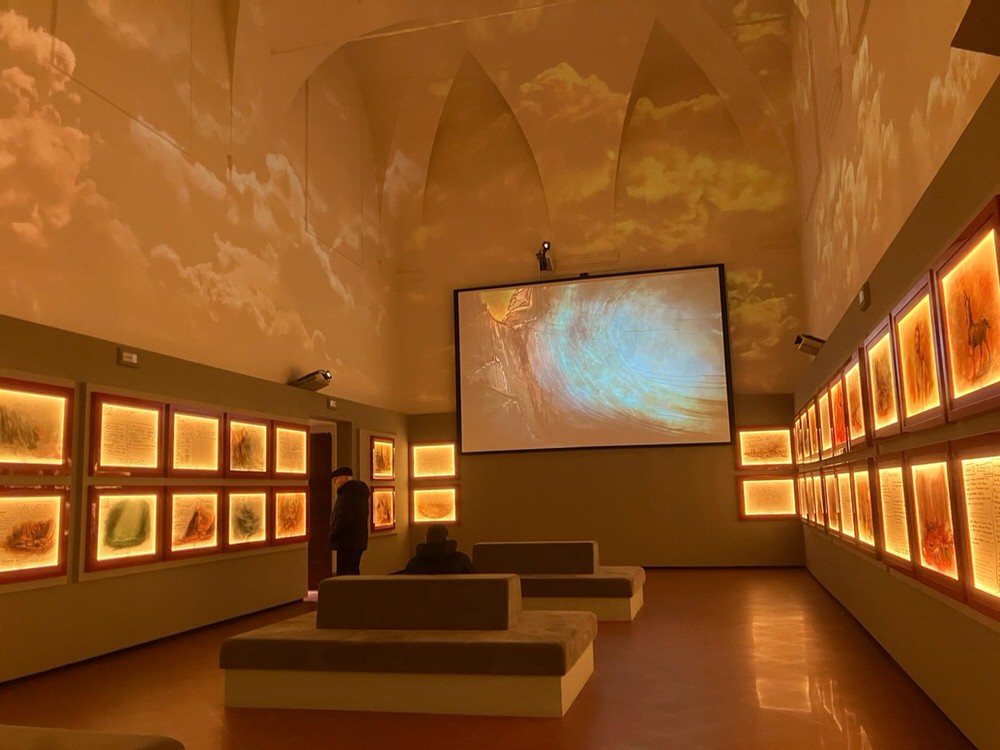
Zeffirelli’s interpretation of Dante’s inferno.