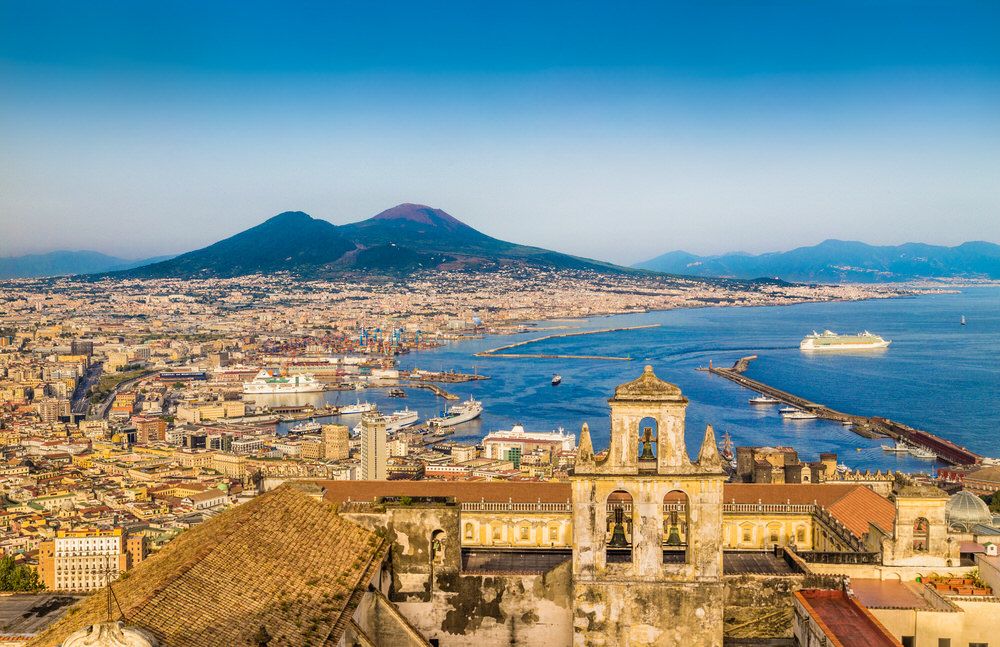
Campania, nel sud-ovest d’Italia, è conosciuta per la sua storia, la sua costa e la sua cucina. La città più grande, Napoli, è dove è nata la pizza. Napoli ha anche una piazza centrale iscritta all’UNESCO. La regione è sede delle rovine di Pompei e Ercolano, due città antiche che furono scavate dopo l’eruzione del Monte Vesuvio. La Costiera Amalfitana e le piccole isole, come Capri e Ischia, offrono passeggiate meravigliose. La regione è anche conosciuta per le festività, le tradizioni e diversi piatti, come la mozzarella di bufala campana e le sfogliatelle. Insomma, la Campania offre molte esperienze culturali per tutti coloro che la visitano.
The Campania region of Italy, located in the southwestern part of the country along the Tyrrhenian Sea, is a land of extraordinary contrasts: bustling cities, idyllic coastline, ancient ruins, and rich culinary traditions. Famous for its history, natural beauty, and food, Campania offers travelers an unforgettable Italian experience.
At the center of Campania lies Naples, Italy’s third-largest city and a lively hub of culture, history, and cuisine. Naples is renowned as the birthplace of pizza, particularly the world-famous Margherita. Beyond its culinary fame, Naples boasts a historic center recognized as a UNESCO World Heritage site, filled with baroque churches, palaces, and narrow streets that hum with local life.
The city also serves as a gateway to Pompeii and Herculaneum, two of the most important archaeological sites in Italy, both destroyed and preserved by the eruption of Mount Vesuvius in 79 AD. Visitors can step back in time while exploring the remarkably intact ruins of Roman villas, frescoes, and streets.
Campania is also famous for its stunning coastline. The Amalfi Coast stretches along dramatic cliffs dotted with colorful towns like Amalfi, Positano, and Ravello. This region is a popular destination for travelers seeking breathtaking sea views, luxury hotels, and charming local culture. Boat tours allow visitors to explore hidden coves, seaside grottos, and pristine beaches along the coastline.
Nearby, the Bay of Naples offers scenic vistas of the sea and islands, including Capri and Ischia, both famous for their picturesque towns, hiking trails, and natural thermal springs. Capri, in particular, is known for the Blue Grotto, a glowing sea cave that enchants tourists with its azure waters.
Campania is a culinary powerhouse. Beyond pizza, the region is celebrated for its fresh seafood, buffalo mozzarella (Mozzarella di Bufala Campana), pasta dishes like spaghetti alle vongole, and pastries such as sfogliatella. Local wines, particularly those produced around Mount Vesuvius and the Amalfi Coast, complement the rich cuisine. Food markets, trattorias, and family-run eateries in Naples and small towns provide an authentic taste of Campanian life.
For outdoor enthusiasts, Campania offers a range of natural attractions. Vesuvius National Park allows hiking near the famous volcano with panoramic views of the Bay of Naples. The Cilento Coast is a quieter, less touristy stretch of coastline with hiking trails, archaeological sites, and pristine beaches. The region’s diversity makes it easy to combine cultural exploration with outdoor adventure.
Campania is a region deeply rooted in tradition. Festivals celebrating saints, seasonal foods, and historic events are common. The Napoli Pizza Festival, religious processions, and music events showcase the vibrant culture and community spirit of the Campanian people. Visitors are encouraged to immerse themselves in local life by exploring markets, attending festivals, and enjoying regional music and dance.
From ancient ruins to sparkling coastlines, from world-famous pizza to breathtaking natural beauty, Campania is a region that captivates every traveler. Its combination of history, culture, and cuisine makes it one of Italy’s most compelling destinations. Whether wandering through the streets of Naples, sailing along the Amalfi Coast, or hiking near Vesuvius, visitors to Campania are sure to leave with memories that last a lifetime.