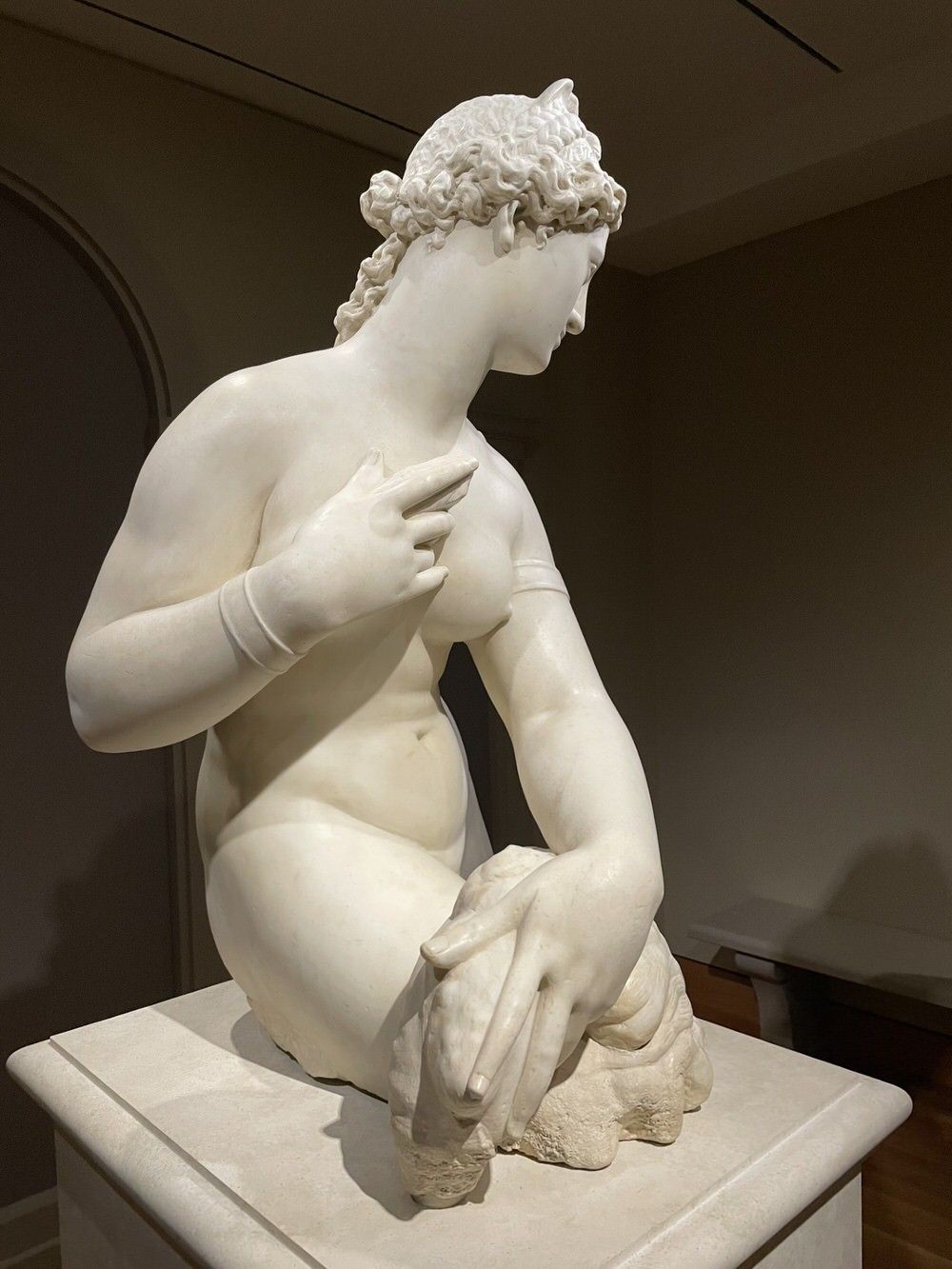
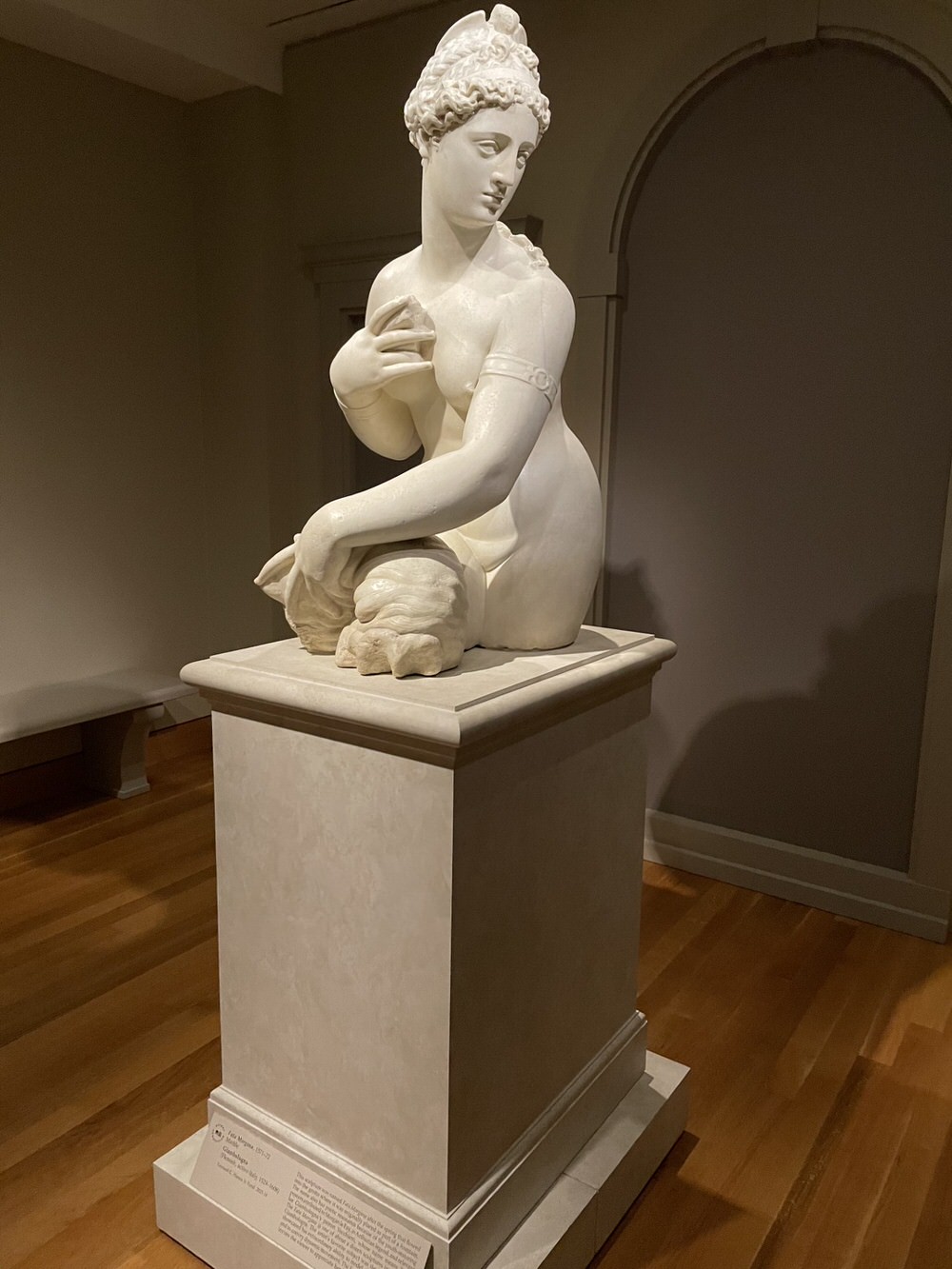
In 2025, the Cleveland Museum of Art (CMA) acquired the only remaining marble sculpture by Giambologna, the “Fata Morgana”. This was named the Museum Acquisition of the Year for 2025. The sculpture was added to the Italian Renaissance collection last August and is only one of three of Giambologna’s pieces that are outside of Italy. One is in the Getty Museum in Los Angeles, and another is in the V&A Museum in London.
Giambologna, as he is known, was born Jean de Boulogne in the Spanish Netherlands, Flanders, now France, in 1529. He moved to Rome in 1550, settled in Florence, and became the principal court sculptor for the Medici family, who ruled Florence and later Tuscany, from the 15th through the 18th century.
He is considered to be the greatest bronze and marble sculptor of the Italian Mannerist period, a style which acted as a bridge between the High Renaissance and the Baroque periods of art.
The Mannerist style’s key characteristics include the “figura serpentinata,” featuring elongated, stylized, twisting figures with no clear focal point, which are best viewed in the round. The spiral lines redirect the eye endlessly, refusing a stable center. It breaks from the Renaissance style in that it refuses nudity as eroticism, violence as moral resolution, and submission as virtue. The Fata Morgana remains elusive and elegant, minus the drama.
In 1572, Giambologna was commissioned by Bernardo Vecchietti, a prominent banker and Medici advisor, to sculpt a piece for his private garden fountain in his villa, “Il Riposo” in Bagno a Ripoli. This became known as the “Fata Morgana,” a female nude figure appearing to emerge from a grotto, one hand holding a shell from which the spring water flowed into an oval shell basin. She is a depiction of the mythical Morgan le Fay, a sorcerer and enchantress of Arthurian legend. She had a supposed power to restore youth and was said to have used illusions to trap sailors in the Strait of Messina. This sculpture is intellectually powerful as opposed to physically aggressive, as many other sculptures are interpreted.
For two centuries, the “Fata Morgana” remained in the Villa’s garden, and in the 18th century she was moved inside. The piece entered the Art Market in 1775 through the English artist and dealer Thomas Patch. She remained in England, was misidentified, changing private hands, until the CMA’s acquisition in 2025. It wasn’t until 1989 that the sculpture was reattributed to Giambologna when it resurfaced at an auction house.
The “Fata Morgana” began as a myth when, as Morgan le Fay, she became a work of art as an elusive fountain sculpture, and was “given to science” as a technical term adopted by physics and meteorology in the 1800s. A “fata morgana” describes a complex mirage appearing above the horizon caused by light bending through a thermal inversion when hot air meets cold. This is a rare type of mirage that makes distant objects such as ships or mountains appear to be floating. Early observers of this attributed it to sorcery, hence the term applied as a “fata morgana”.
This extraordinarily rare and internationally renowned sculpture may be viewed in the Italian Renaissance collection in Gallery 117B. The Cleveland Museum of Art, which remains free to the public, is one of the most visited museums in the world. The museum opened its doors to the public in 1916 with Jeptha Wade II proclaiming it “for the benefit of all people, forever”.
Photos by Joanna Lucarino