Every year in the weeks leading up to Lent, Italy explodes in a joyful celebration of Carnevale, a festive season filled with masks, parades, music, food, and centuries-old traditions. In 2026, this period of merrymaking runs around late January through mid-February, culminating on Martedì Grasso (Fat Tuesday) on February 17, 2026, the last day before the start of Lent.
Carnevale is Italy’s version of Mardi Gras, a time when ordinary life gives way to fantasy. Traditionally, it was the last chance to indulge in rich foods and play-acting before the solemn fast of Lent. Over the centuries, it evolved into a national cultural phenomenon that varies widely from region to region, each city and town weaving its own history and customs into the celebration.
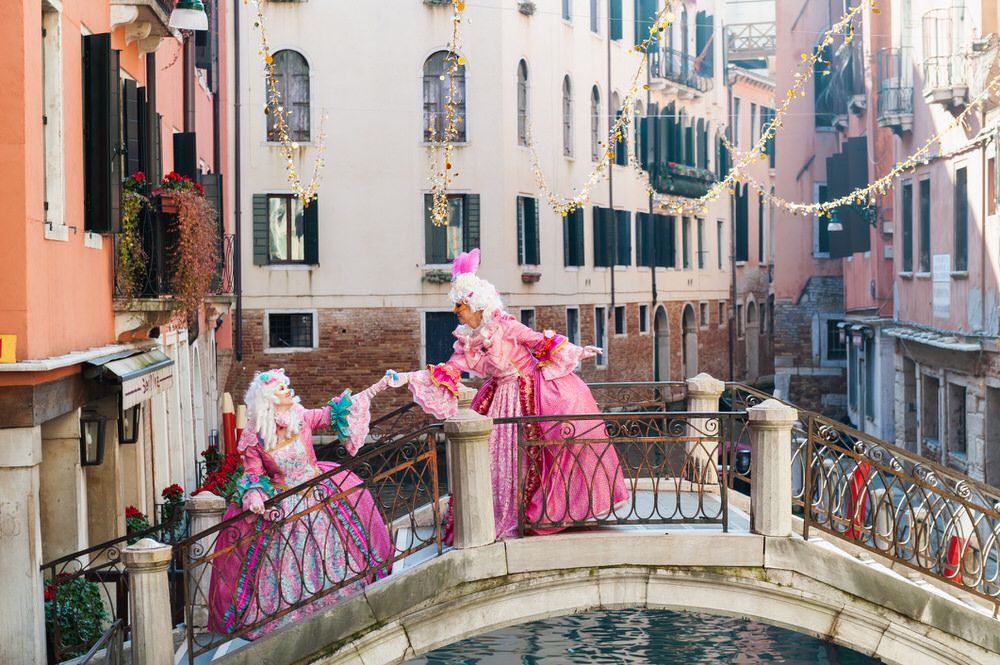
No list of Italian Carnevale celebrations is complete without Venezia’s Carnival, arguably the most iconic in the world. The 2026 edition celebrates the Olympic spirit tied to Milano-Cortina 2026, blending history, sport, and spectacle and runs from January 31 – February 17, 2026, marking about 18 days of festivities.
Elaborate masked balls, costume contests, open-air performances, musical concerts, gondola parades on the canals, and the famous Festa delle Marie are just some of the events hosted throughout the country during Carnivale.
In Venice, the festival transforms the entire city into a theatrical backdrop where visitors and locals alike don ornate masks and costumes reminiscent of the Renaissance and Baroque periods. In Tuscany, the Carnevale di Viareggio is a feast for the senses, known for its giant papier-mâché floats that often satirize politics and current events. The Viareggio Carnival draws families and art lovers alike, celebrating creativity, satire, and community spirit.
Sicily’s Acireale Carnival showcases spectacular allegorical floats adorned with flowers, lights, and mechanical art pieces set to music. One of Italy’s oldest carnivals, Foiano della Chiana in Tuscany boasts colorful parades of groups competing for the most beautiful float and a tradition dating back to the 1530s.
Famous for the Battle of the Oranges, a symbolic orange-throwing event that reenacts a medieval uprising and draws thousands of spectators, historic Ivrea Carnival in the Piedmont region is a celebration not to be missed.
Considered one of Europe’s longest-running carnivals, Puglia’s Putignano mixes parade floats, traditional music, and street performances over several weeks.
In the mountain regions such as South Tyrol, Trentino, and Belluno, Carnival takes on local flavor with ski carnivals, masked parades, and folklore-inspired rituals. The Zinghenesta in Canale d’Agordo and traditional parades in Friuli are standout events in mid-February.
Across Italy, some motifs remain constant. From elegant Venetian ‘bauta’ and ‘colombina’ to local folk masks like Sardinian Mamuthones, symbolism and art blend with festivity. Carnivale is a season for sweet treats—chiacchiere (crispy fried ribbons), castagnole and other regional specialties are enjoyed before the Lenten fast. Parades, public music, and theater invite everyone to participate, making Carnevale both a tourist attraction and a deeply rooted expression of Italian cultural heritage.
Carnevale in Italy isn’t just a party. It’s a living tapestry of history, regional identity, artistry, and community pride. Whether you’re captivated by the elegance of Venetian masks, the theatrical floats of Viareggio, or the folklore of alpine villages, the 2026 Carnevale season offers something magical for everyone.