Spring in Italy is a season of renewal with longer days, blooming countryside, and a calendar filled with historic festivals. From religious processions to flower carpets and medieval horse races, spring is one of the most vibrant times to experience Italian culture at its most authentic. Here’s a look at some of the most iconic festivals across Italy during the spring months.
Infiorata Festivals (April–June): Across central and southern Italy, towns celebrate Corpus Domini with the Infiorata, intricate carpets made entirely of flower petals laid along streets and piazzas.
One of the most famous takes place in Spello, where artists and volunteers work overnight to create detailed floral mosaics depicting religious and artistic themes. Another renowned version is held in Noto, where Baroque streets become vibrant canvases of color. These ephemeral masterpieces last only a few days, making them both spectacular and fleeting.
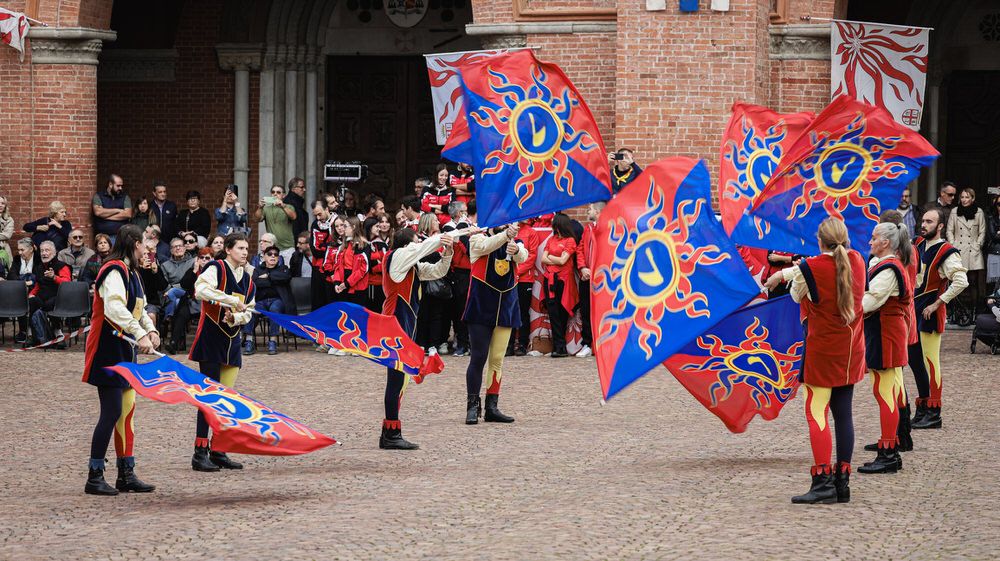
Palio di Legnano (May): Held in Legnano, the Palio di Legnano commemorates the 1176 Battle of Legnano. The festival features a grand medieval parade with hundreds of participants in period costume, culminating in a dramatic horse race between the town’s historic districts.
While often compared to Siena’s more famous race, Legnano’s version offers a powerful sense of local pride and pageantry without overwhelming crowds.
Scoppio del Carro (Easter, Florence)
One of Italy’s most explosive Easter traditions takes place in Florence. The Scoppio del Carro (“Explosion of the Cart”) dates back centuries.
A decorated cart filled with fireworks is ignited in front of the Cathedral of Santa Maria del Fiore. A mechanical dove launched from inside the cathedral lights the fuse, triggering a dramatic display meant to ensure good harvests and prosperity. It’s a striking blend of religion, ritual, and theatrical spectacle.
Maggio Musicale Fiorentino (April–June): Spring also marks the return of Italy’s major cultural festivals, including the Maggio Musicale Fiorentino in Florence.
Founded in 1933, this prestigious festival celebrates opera, classical music, and ballet. Internationally acclaimed orchestras, conductors, and performers gather in Tuscany’s Renaissance capital for performances that blend historic grandeur with artistic innovation.
Festa dei Ceri (May 15): In the hill town of Gubbio, the Festa dei Ceri is one of Italy’s most intense and ancient celebrations.
Three towering wooden structures topped with statues of saints are carried at high speed through the streets by teams of runners dressed in traditional colors. The race-like procession ends at the Basilica of Saint Ubaldo.
Dating back to the 12th century, the event is less a tourist attraction and more a deeply rooted act of civic devotion.
Festa della Sensa (May, Venice): In Venice, spring brings the Festa della Sensa, celebrating the city’s historic “Marriage to the Sea.”
The mayor reenacts an ancient ritual by symbolically casting a ring into the lagoon, affirming Venice’s connection to the water that shaped its power and prosperity. Historic boats, rowers in traditional dress, and regattas create a uniquely Venetian atmosphere.
Calendimaggio (May, Assisi): The Umbrian town of Assisi hosts Calendimaggio, a medieval spring festival that divides the town into two competing districts.
Over several days, locals perform historical reenactments, music competitions, and elaborate costume parades. The entire town transforms into a living medieval stage set, without modern signage or distractions.
Food Festivals (Sagre) Across the Country: Spring also launches Italy’s beloved sagre or local food festivals dedicated to seasonal ingredients. Depending on the region and month, you may find celebrations of artichokes in Lazio, wild asparagus in Veneto, strawberries in Emilia-Romagna, and new olive oil in southern Italy.
These festivals are community-centered, affordable, deeply local and often held in small towns rarely featured in guidebooks.
Spring is ideal for festivals in Italy because the season offers comfortable temperatures, fewer crowds than summer, blooming landscapes, and a strong mix of religious, historical, and culinary events.
It’s a time when Italy feels both alive and accessible. When ancient traditions move from churches and archives back into the streets.
What makes spring festivals in Italy special isn’t just their beauty. It’s their continuity. Many of these events date back centuries and remain organized by local families, parishes, and neighborhoods rather than tourism boards.
Traveling through Italy in spring means stepping into living history: flower petals underfoot, church bells ringing, medieval banners flying, and tables filled with seasonal food.
It’s not just a celebration of the season; it’s a celebration of identity.