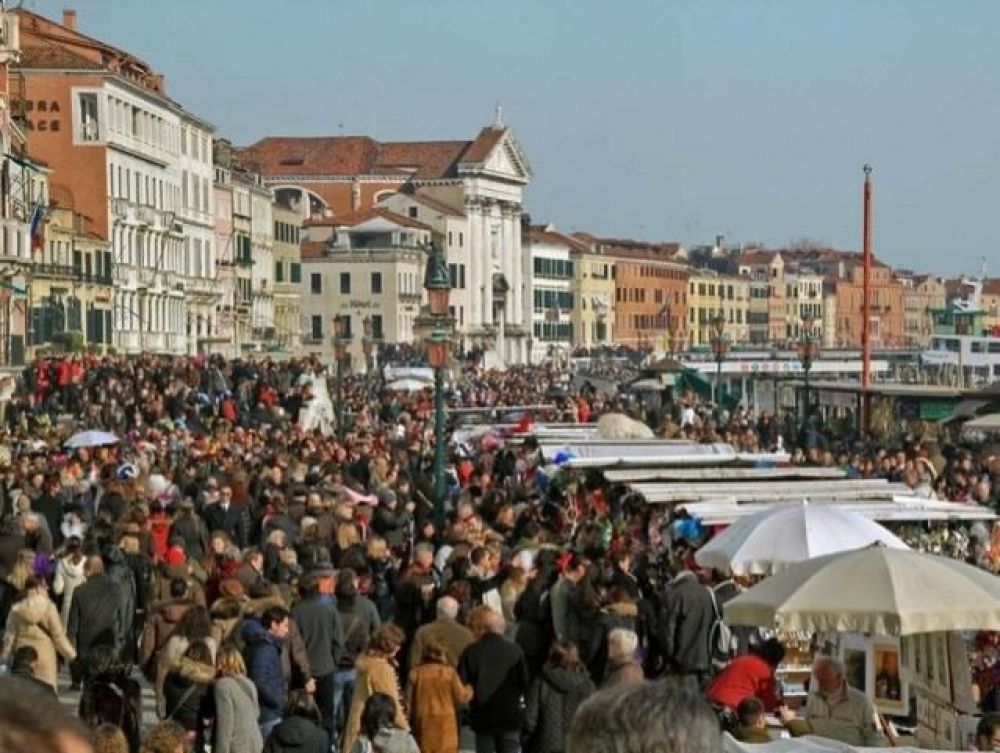
Benjamin Franklin popularized the maxim that guests and fish smell after three days. Just picture yourself at home with visitors staying months on end. And then another wave of guests. And more each week. What would your utilities bill look like, your kitchen? I think we’d all find it exhausting and expensive, even if the visitors were family members and agreed to pitch in to share costs. Still, would you feel at home with all their comings and goings and with new bunches arriving all the time?
With worldwide tourism returning to pre-Covid numbers, Italy and other world heritage sites are again feeling the brunt of crowds of tourists. The term that seems to have caught on is “over-tourism.” The beautiful public spaces that have attracted visitors for centuries are being pushed over the limit. Electronic booking has made it easier to secure a stay without ever meeting the renter. One effect: Foreigners are driving up local rental prices.
Venice is probably the world’s most impacted tourist magnet. This precious but fragile gem draws 30 million visitors each year, the majority are day trippers who often crowd out natives trying to pursue their daily routines. Cruise ships have been especially damaging to port facilities on the Grand Canal. Celebrity weddings that shut down whole neighborhoods create serious obstacles for city dwellers on their way to work. Permanent residents feel that Venice is becoming less like home and more like an overpopulated movie set, an example of the Disneyfication of yet another cultural site. Sadly, Venetians are leaving Venice.
Over-tourism is impacting Rome, as well, where landlords convert apartments to short term rentals. According to a recent article in The Globalist, during the 2024 high tourist season, 3,283 short term rentals were available in the Eternal City. Jubilee Year 2025 saw the number balloon to almost 25,000. This has removed a huge chunk of affordable spaces for Romans while increasing rents at the same time. The waiting list for subsidized public housing has grown. Sadly, homelessness in the Eternal City has shot up.
In Naples, the boom in tourism is a recent phenomenon. For years, the city’s traffic, crime, and sanitation problems detoured visitors. Times have changed with some improvements in municipal services. The new highspeed Freccia trains make the trip from Rome to the city in a little over an hour. Add to the increase is the largest outlet store in Italy, La Reggia Designer, a short drive from Naples. The number of BnBs and AirBnBs is surging. But Neapolitans feel increasingly squeezed by gentrification caused by the disappearance of affordable long-term housing. Moreover, shops that once catered to the resident population are disappearing as the growth in tourist venues takes hold. An old Italian song invites the listener to Vieni sul Mare, but what will they find in this seaside gem? Where has authentic Napoli gone?
Recently, Italian city governments are responding to protect local heritage and the affordable housing market against the burdens of destructive overcrowding and short-term rentals. Public outcry from Venetians has forced the biggest cruise lines to disembark at Fusina, Marghera, and locations farther away. In 2024, Rome banned the use of lockboxes and electronic entry pads on short term rentals. The municipal government there has increased taxes on Airbnbs and other similar booking agencies. Homeowners will now have to meet guests before turning over the keys. Limiting the number of short-term rentals allowed to each Roman homeowner is another measure. These remedies continue to be hotly debated, and their impact remains to be seen. Nonetheless, many Italians are shouting basta!
Sovraffollamento Turistico: Quando la Propria Casa Diventa un Set Cinematografico Affollato
Benjamin Franklin rese popolare il detto secondo cui gli ospiti e il pesce iniziano a puzzare dopo tre giorni. Immaginate di trovarvi a casa con visitatori che restano per mesi interi. Poi un altro gruppo di ospiti. E altri ancora ogni settimana. Come sarebbe la vostra bolletta, la vostra cucina? Credo che tutti lo troveremmo estenuante e costoso, anche se si trattasse di familiari disposti a contribuire alle spese. Tuttavia, vi sentireste davvero a casa con tutto questo via vai e con nuovi gruppi che arrivano di continuo?
Con il ritorno del turismo mondiale ai livelli pre-Covid, l’Italia e altri siti patrimonio dell’umanità stanno di nuovo subendo l’impatto delle folle di turisti. Il termine che sembra essersi imposto è “overtourism”, ovvero “sovraffollamento turistico”. Gli splendidi spazi pubblici che da secoli attirano visitatori stanno raggiungendo il punto di rottura. Le prenotazioni online hanno reso più facile ottenere un alloggio senza mai incontrare il proprietario. Una conseguenza: gli stranieri stanno facendo aumentare i prezzi degli affitti locali.
Venezia è probabilmente la città più colpita al mondo da questo fenomeno. Questa gemma preziosa ma fragile attira 30 milioni di visitatori ogni anno, la maggior parte dei quali sono turisti giornalieri che spesso ostacolano i residenti nelle loro attività quotidiane. Le navi da crociera hanno danneggiato in modo particolare le strutture portuali sul Canal Grande. I matrimoni di celebrità che paralizzano interi quartieri creano gravi disagi per i cittadini che si recano al lavoro. I residenti permanenti sentono che Venezia sta diventando sempre meno una casa e sempre più un set cinematografico sovraffollato, un esempio della “Disneyficazione” di un altro sito culturale. Purtroppo, i veneziani stanno abbandonando la loro città.
Anche Roma è colpita dal sovraffollamento turistico, con proprietari che trasformano gli appartamenti in affitti a breve termine. Secondo un recente articolo di The Globalist, durante l’alta stagione turistica del 2024 erano disponibili 3.283 alloggi di questo tipo nella Città Eterna. Nell’Anno Giubilare 2025 il numero è salito a quasi 25.000. Questo ha eliminato una grande quantità di abitazioni accessibili ai romani, facendo aumentare gli affitti. La lista d’attesa per l’edilizia popolare si è allungata. Purtroppo, anche la senzatetto nella Città Eterna è in aumento.
A Napoli, il boom turistico è un fenomeno più recente. Per anni, traffico, criminalità e problemi di igiene hanno tenuto lontani i visitatori. Ma i tempi sono cambiati, con alcuni miglioramenti nei servizi municipali. I nuovi treni ad alta velocità Freccia collegano Roma a Napoli in poco più di un’ora. A questo si aggiunge il più grande outlet d’Italia, La Reggia Designer Outlet, a pochi chilometri dalla città. Il numero di B&B e AirBnB è in forte crescita. Tuttavia, i napoletani si sentono sempre più schiacciati dalla gentrificazione causata dalla scomparsa delle abitazioni a lungo termine a prezzi accessibili. Inoltre, i negozi che un tempo servivano la popolazione locale stanno sparendo, sostituiti da attività rivolte ai turisti. Una vecchia canzone italiana invita ad andare a “Vieni sul Mare”, ma cosa troveranno oggi in questa gemma sul mare? Dov’è finita la Napoli autentica?
Di recente, i governi delle città italiane stanno reagendo per proteggere il patrimonio locale e il mercato delle abitazioni accessibili dai danni del sovraffollamento e degli affitti brevi. Le proteste dei veneziani hanno costretto le principali compagnie di crociera a far sbarcare i passeggeri a Fusina, Marghera e in località più lontane. Nel 2024 Roma ha vietato l’uso di cassette di sicurezza e serrature elettroniche negli affitti a breve termine. Il governo municipale ha aumentato le tasse sugli AirBnB e piattaforme simili. I proprietari dovranno ora incontrare di persona gli ospiti prima di consegnare le chiavi. Un’altra misura prevede la limitazione del numero di affitti brevi consentiti a ciascun proprietario romano.
Questi rimedi sono ancora oggetto di vivace dibattito, e i loro effetti restano da valutare. Tuttavia, molti italiani gridano a gran voce: basta!