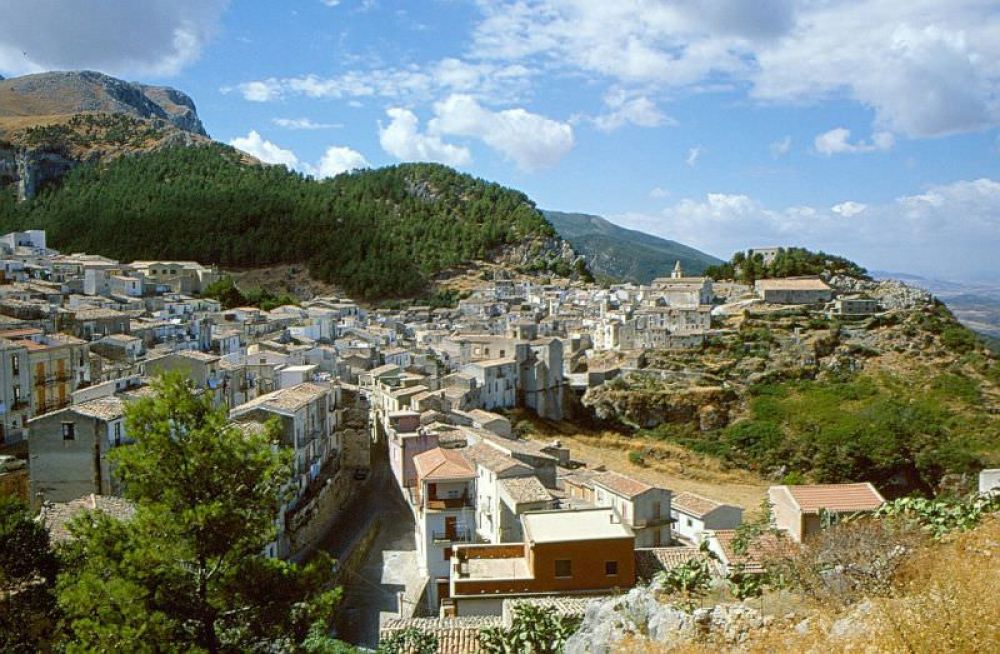
Weaving through the peninsula of Italy, the Apennines stretch from Genoa in the north to Reggio di Calabria at the toe of the boot; but the mountain range doesn’t end there. It connects, undersea through the Strait of Messina, to the northeastern tip of Sicily and continues along the northern coast of Sicily to Palermo. Within this stretch of the Southern Apennines, is the Madonie Mountain Range, a national park. Its tallest peak, at almost 6,500 feet, is Pizzo Carbonara, the second highest in Sicily after Mt. Etna (around 11,000 feet).
About 40 miles east of Palermo and ten miles south of Cefalú, Madonie National Park extends across the Southern Apennines east to the Nebrodi Mountain Range, which is also a national park – the largest in Sicily, followed by the Madonie.
Sicily has a rich cultural history: after the settlements of native tribes, colonization of Sicily by both Greece and the Phoenicians – who traveled from cities along the east coast of the Mediterranean Sea – began around 800 BC. The Phoenicians immigrated to the western half of the island, establishing what is today Palermo. Romans, the Byzantine Empire, Arabs, Normans, Spain and the House of Bourbon would subsequently rule until Sicily became part of the Italian Republic in 1861.
Within the close to 100,000 acres of Madonie National Park, fifteen ancient villages dot the mountainous terrain. Some were founded in the early years of colonization, others under different rule. Narrow winding cobblestone streets lead to bell towers, castles, churches, fountains, public buildings, stately homes and village squares, all revealing their historic cultural significance; and all in a natural environment of extraordinary biodiversity.
Madonie National Park was established in 1989 to preserve the native plants and wide variety of trees – many grown only in the area – acclimated to the environment of the region. Because of the unusual ecological surroundings, in 2015 the park was designated a UNESCO Global Geopark: “among the most beautiful landscapes of special interest from a geologic and geomorphologic, as well as from a didactic, point of view. ... It represents nearly all aspects of Sicilian geology, has a very complex history that started over 220 million years ago, and is mainly composed of dolomitic limestone evoking unknown and vanished worlds.”
One of the trees that grow in the park – specifically in the villages of Castelbuono and Pollina – is a species of the ash tree, Fraxinus ornus. The sugary sap it produces, known as manna, is used in medications and cosmetics. A natural sweetener, manna is included in the Slow Food movement. According to the Consorzio Manna Madonita, “Four cooperatives of producers ... take care of the ash groves and the manna harvest, respecting the rhythms of the seasons and the inspiring nature of the Madonie Park. ... Produced since the second half of the 1500s in various parts of Sicily, today manna is harvested only in the Madonie region.”
Another specialty food from the Madonie region is several species of snails developed by Lumaca Mandonita, two brothers and a friend who founded, what is now, one of the largest snail-production farms in Italy. Their production methods have become an educational resource for other snail farmers, focusing on the ecology of location and climate.
From the online magazine Cefalú.it: “The Snail Madonita is fed exclusively with organic vegetables and raised in a protected habitat: a microclimate that only the unspoiled nature of Sicily and the Madonie can offer. ... In addition, from the snails are obtained some essential elements for the creation of innovative gastronomic products. The Pearls of the Madonie, for example, often called ‘snail caviar’. Snail Madonita is the first producer in Italy (and the fifth in the world) of these precious eggs, used by numerous starred chefs for the creation of signature dishes.”
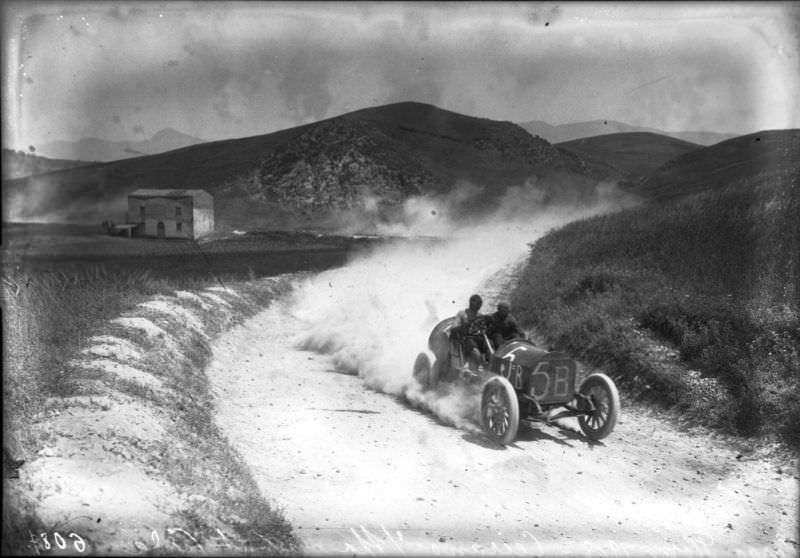
Although the biodiversity of the Madonie Mountains earns it much acclaim, the terrain offers an alternative form of admiration – the Targa Florio. Launched by Vincenzo Florio in 1906, Targa Florio began as a race through the harrowing roads of the mountain range. The race became a test of skill, at first attracting drivers beyond Sicily and later gaining the support of Alfa Romeo, Bugatti, Ferrari, Maserati, Mercedes and Porsche – all using the race to attest to the endurance of their automobiles.
The Florio family were industrialists, starting with a spice and general goods business in Palermo in the late eighteenth century, and expanding into shipbuilding, sulfur trade, tuna fish production and other ventures. Highly regarded for improving the economy and adding to the culture of Sicily, the family also founded in 1833 the first winery in Marsala to produce the popular fortified wine, and continues to produce an assortment of Florio wines today.
Through Vincenzo Florio’s interest in automobiles, Targa Florio became part of the World Sportscar Championship from 1955 to 1973 (Vincenzo died in 1959); and is the longest operational road race in history. With its narrow roads, high speeds and lack of safety standards, it ended in 1977 after several fatal crashes and spectator deaths; but Targa Florio does live on. It inspired Porsche to use Targa in its name branding; it inspired “A Sicilian Dream” a 2015 documentary about the race; and each year participants in the Targa Florio Rally race (at reasonable speeds) on the historic roads that wind through the hills, valleys and ancient villages of the Madonie Mountain Range.
-
 Gratteri: https://commons.wikimedia.org/wiki/File:Madonie_5_0034-2.jpg
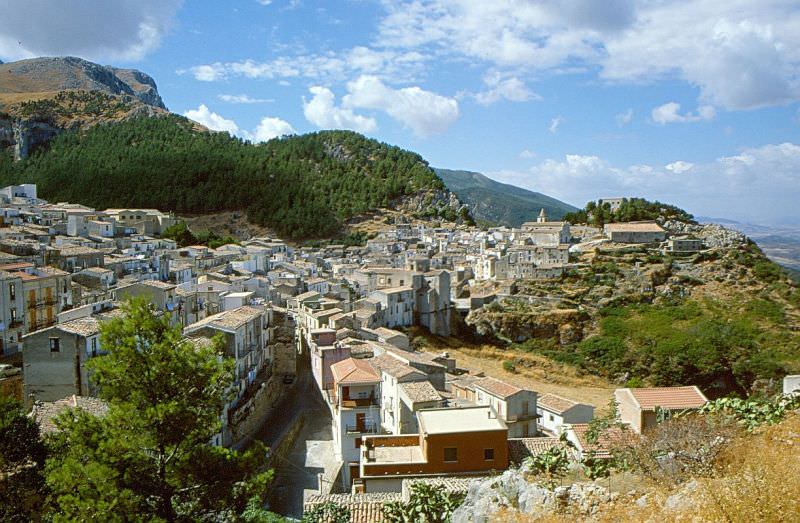
Gratteri: https://commons.wikimedia.org/wiki/File:Madonie_5_0034-2.jpg
Gratteri: https://commons.wikimedia.org/wiki/File:Madonie_5_0034-2.jpg
-
1908 Targa Florio:...
1908 Targa Florio:...
https://www.lagazzettaitaliana.com/history-culture/10681-the-mountains-of-madonie#sigProId00ba600bec