La Festa di Santa Lucia is celebrated in Palermo on December 13, the shortest day of the year. In fact, the name of the 3rd century martyr saint of Siracusa in Sicily signifies a “promise of light”.
Our recent visit to Palermo concluded on December 12, la vigilia della Festa di Santa Lucia. What a grand finale it was. As I did every day during our Palermo stay, I headed that morning to the Pasticceria/Bar Gardenia in Cardillo, completely unaware of the frenzied activity which would greet me.
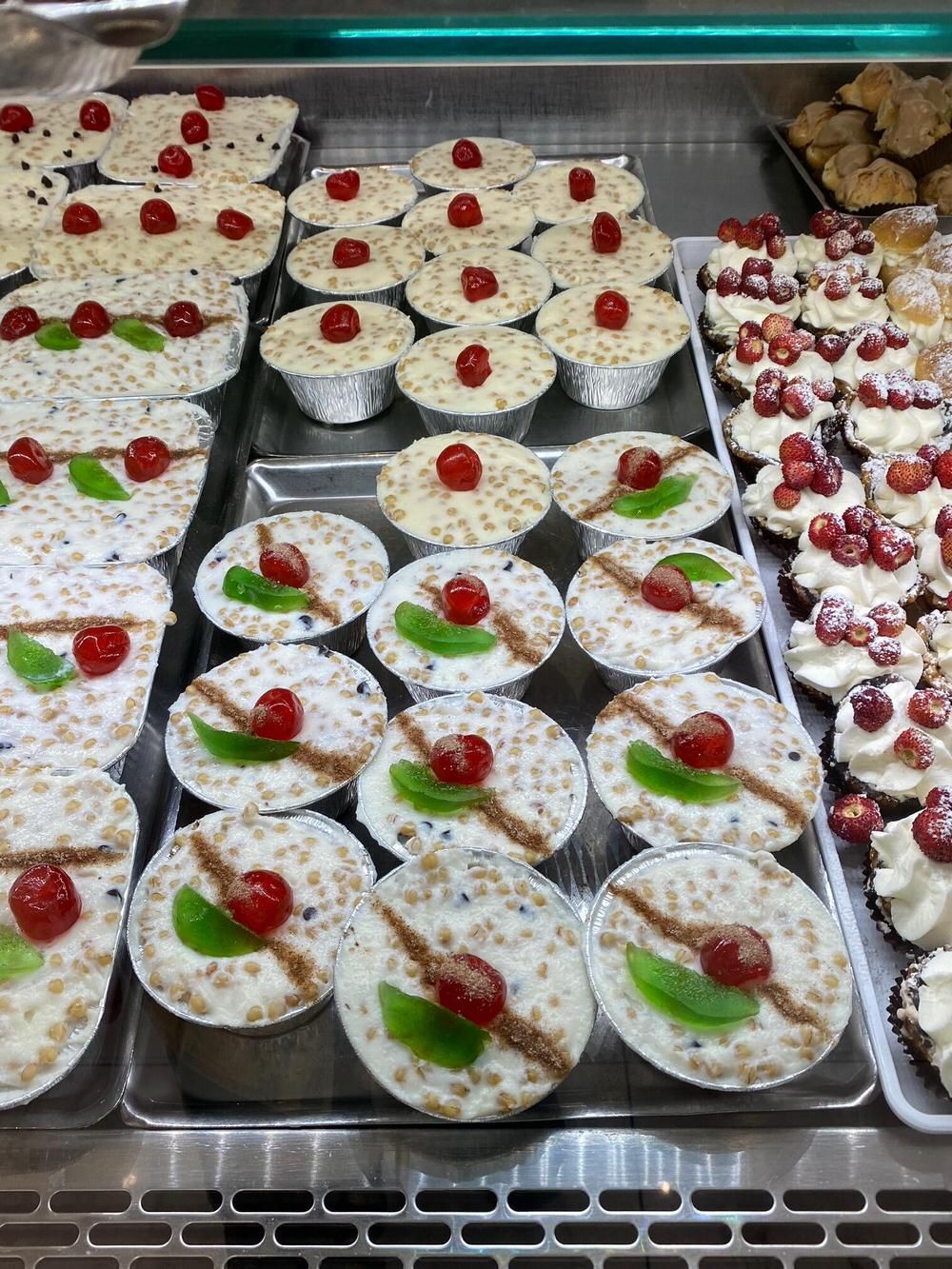
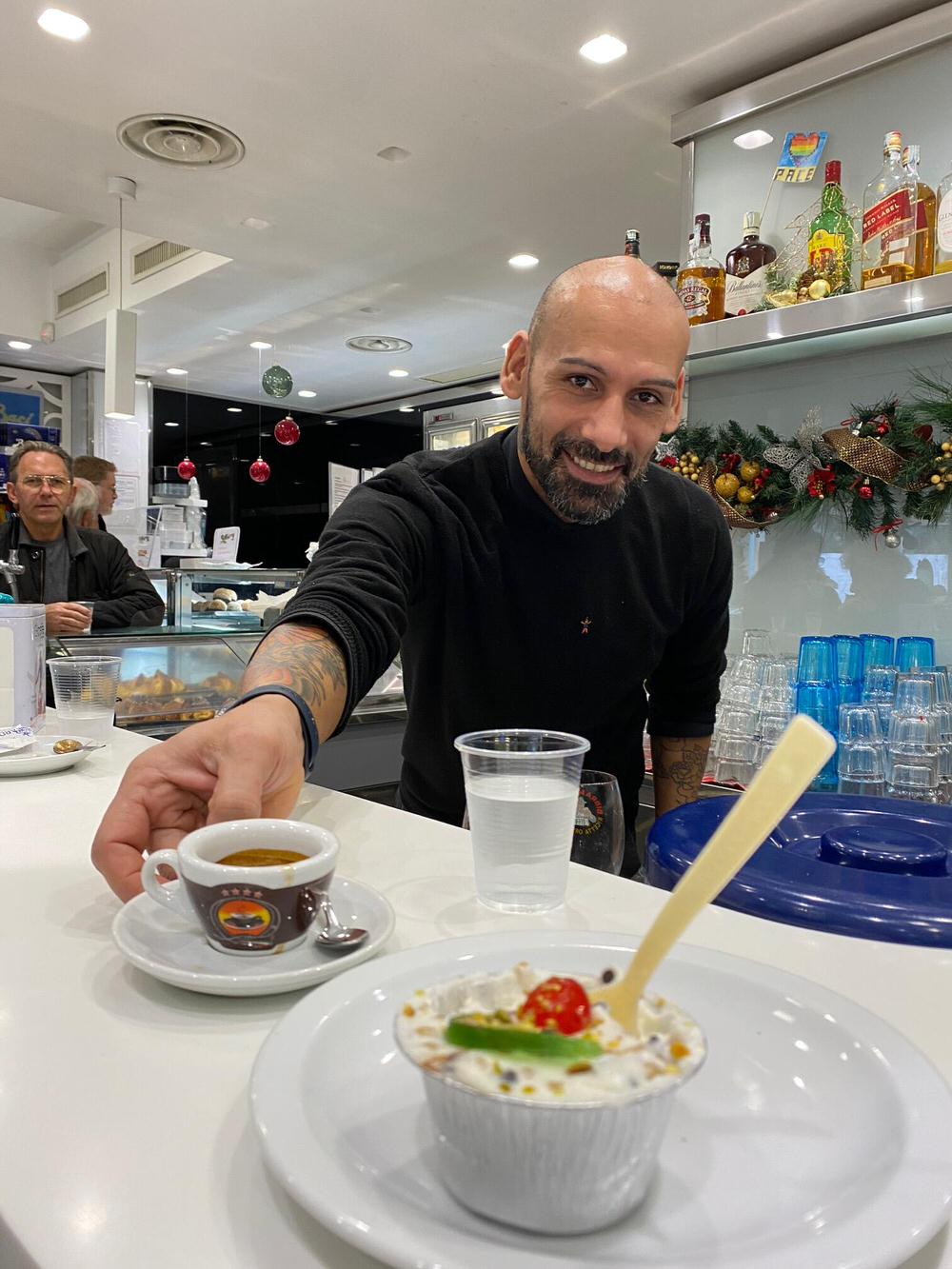
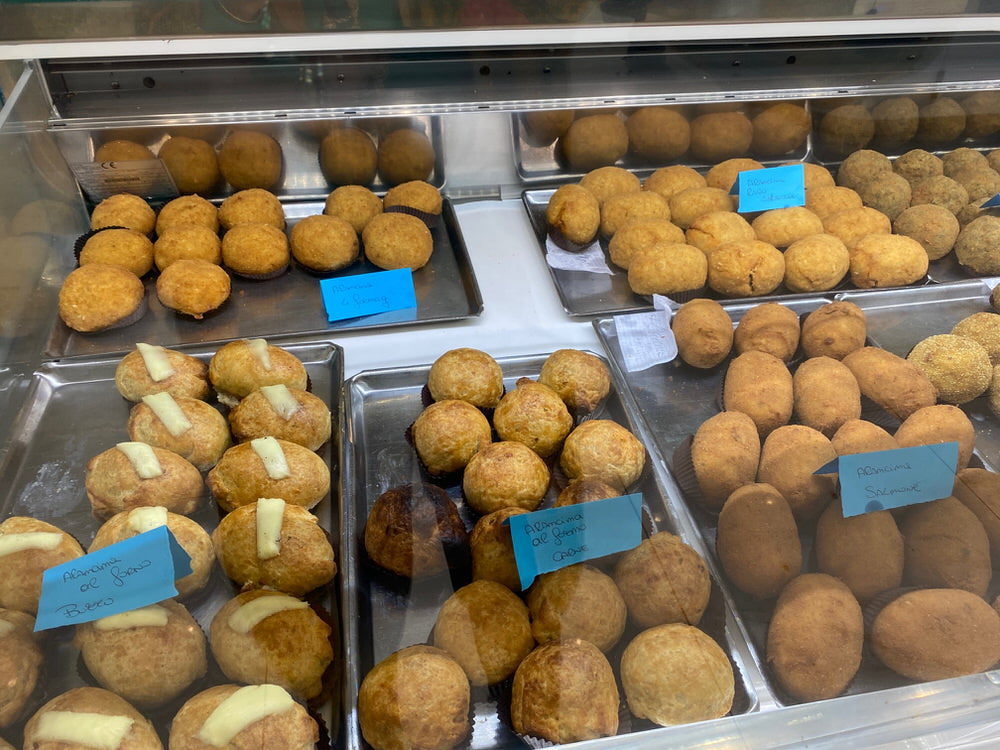
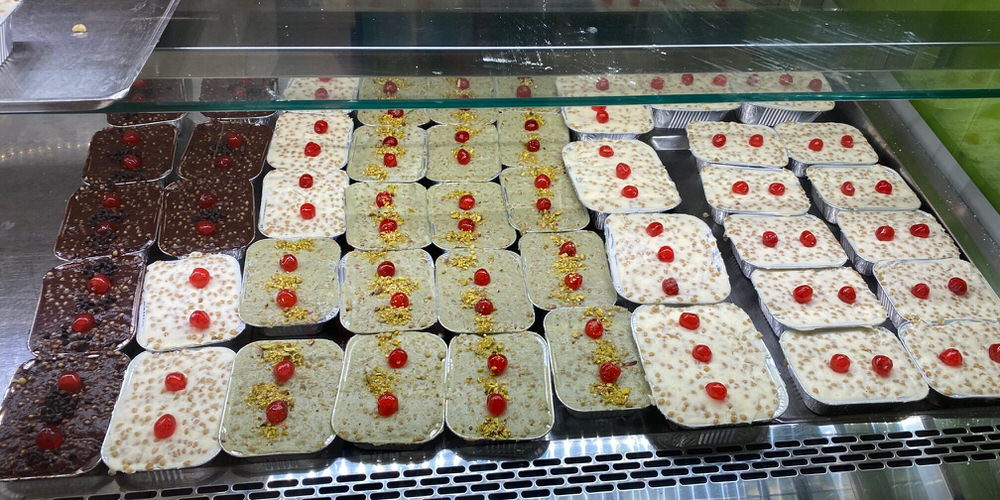
The staff was in feverish preparations for la Festa di Santa Lucia the following day. Some staff members were serving patrons and others wrapped up goodies to take home – items like arancine (stuffed rice balls), gateau di patate (potato flan), and cups of la cuccia, a sweet made of cooked wheat, sheep’s milk ricotta and candied fruit. Barista Roberto served me one with my espresso! It was buonissimo and prompted me to try another Santa Lucia pasticcine (“small pastries”) – the sugar-coated panella dolce.
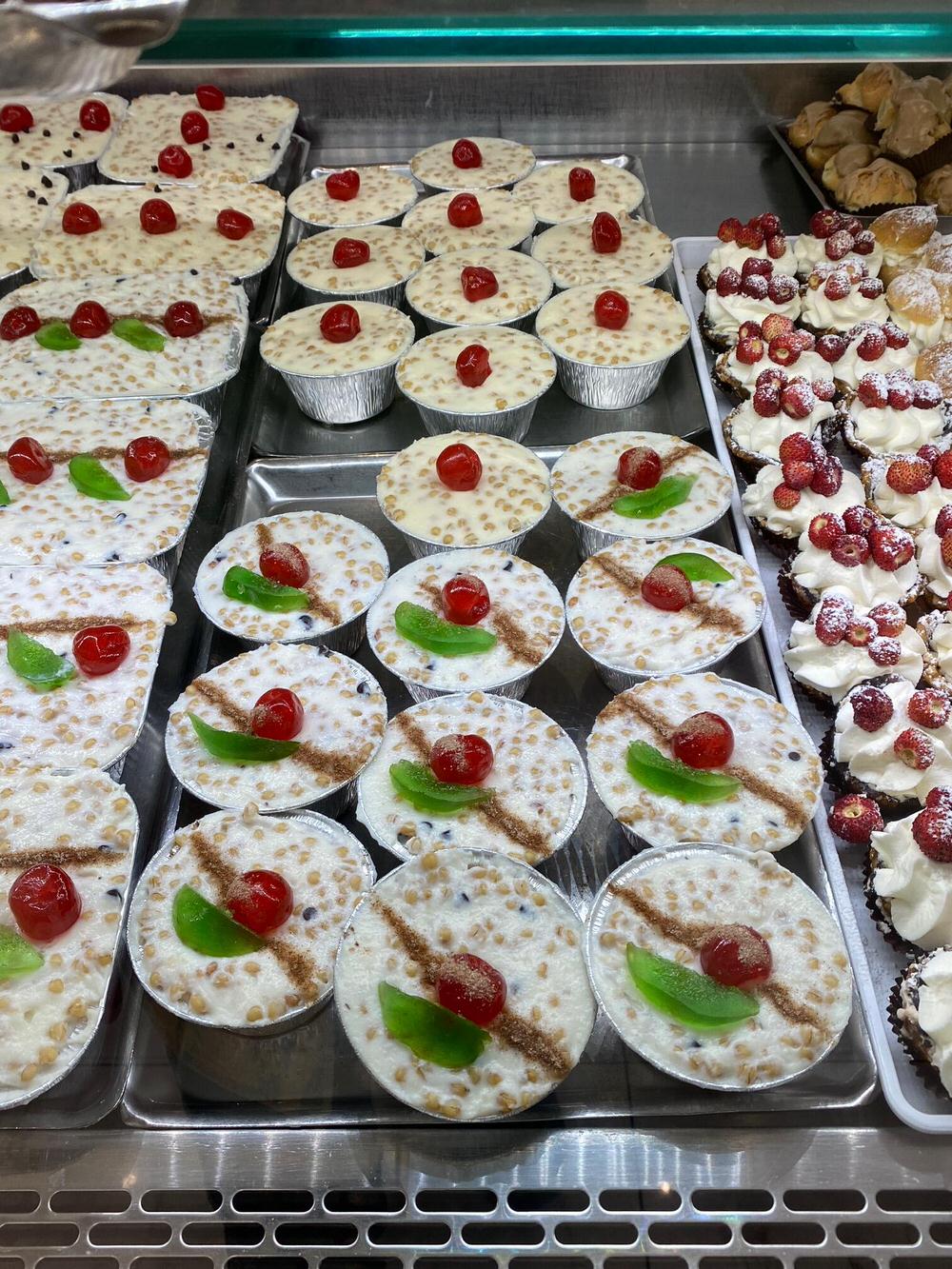
In the glass cases all around us, small cups of la cuccia lined shelves. Rows of cups were flanked by the colorful cassate, another Sicilian sweet with ancient traditions. La cuccia are linked to a 17th century tradition. According to legend, on her feast day, December 13, 1646, a ship loaded with grain pulled into the port of Palermo ending a period of serious famine. To alleviate the ravaging hunger, the wheat was not ground but boiled to be eaten at once. A similar late-18th century story attributes the origins of la cuccia to the city of Siracusa. Sicilian tradition mandates the avoidance of flour on her feast day.
My brother-in-law, Filippo, confirmed the legendary 17th century arrival of the ship but told me that la cuccia, created to celebrate this day, was not originally made with sheep’s milk ricotta and said it’s a more recent addition. Both Filippo and Pino remember “la mamma ha fatto la cuccia per noi solo con il latte.” Both agreed that the use nowadays of ricotta di pecora (ricotta of sheep’s milk), as well as chocolate, candied orange peel or other embellishments, is done “per abbellire la cucina” (“to render more beautiful the cuisine”). Feasting with arancine and gateau di patate on this day is also a recent addition to the Festa di Santa Lucia traditions. As Filippo pointed out, the arancine are rolled in breadcrumbs before frying and flour is in the potato flan as well.
Such interesting culinary history is linked to the Sicilian sweets and savories served up at the Pasticceria/Bar Gardenia. I imagine that all the shelves crowded with Santa Lucia goodness that day were empty by closing time.
https://www.lagazzettaitaliana.com/travel/10742-la-festa-di-santa-lucia#sigProIda5f849598b