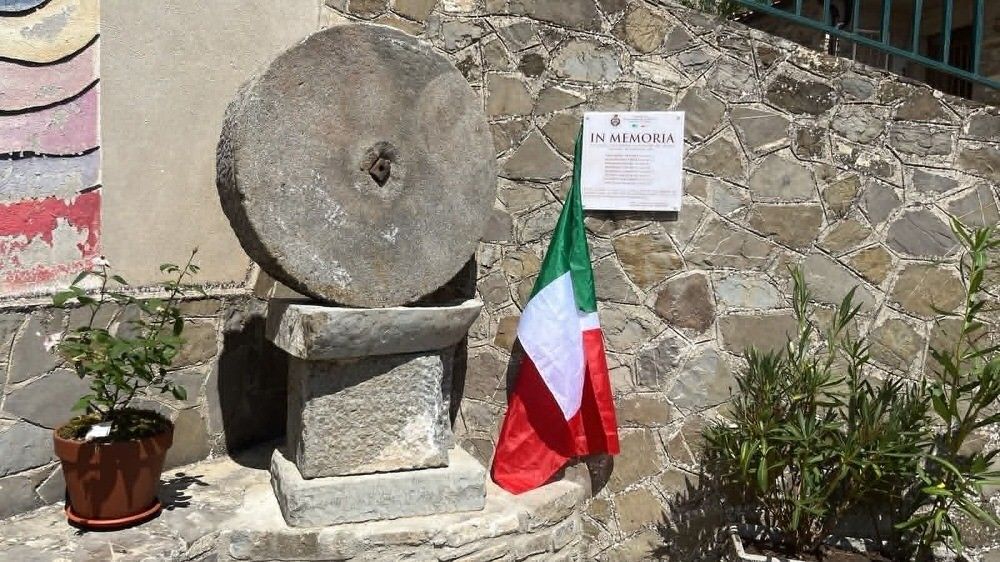
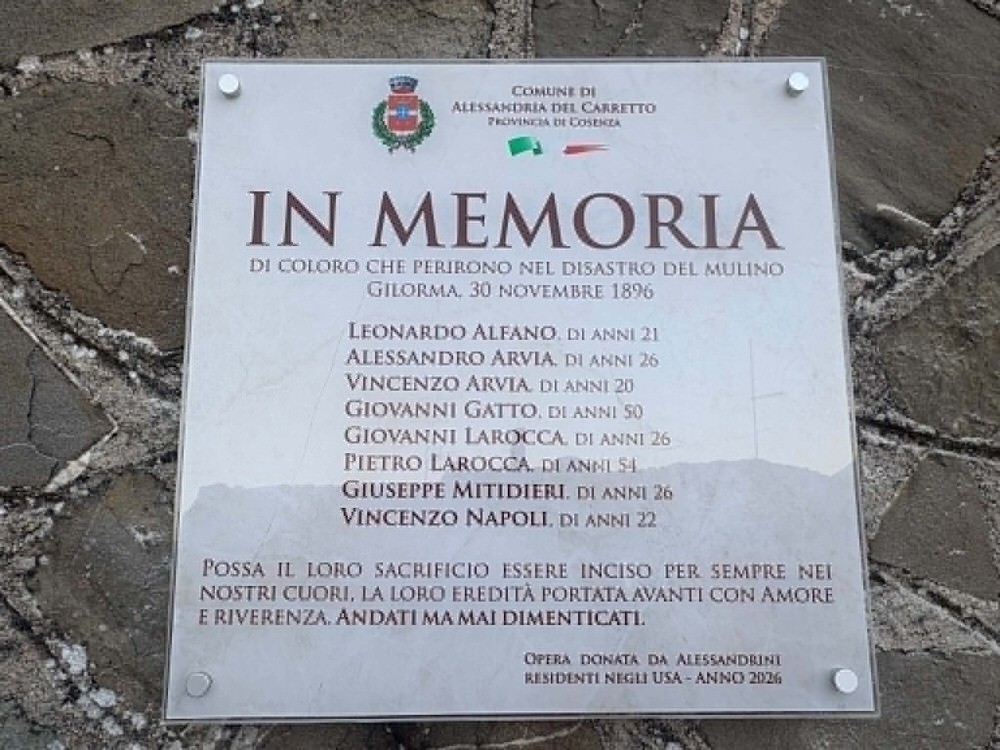
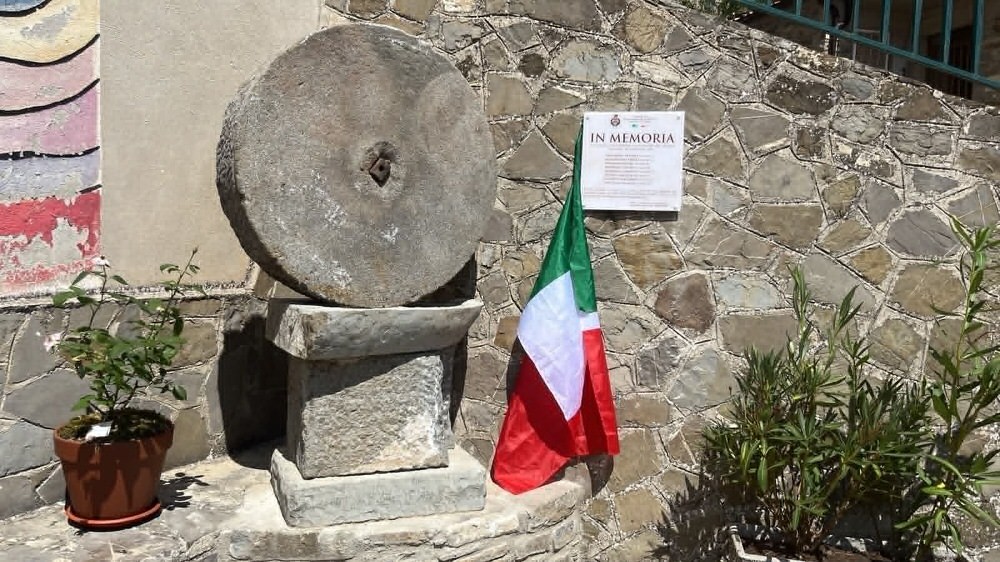
Nelle remote montagne della Calabria, il passato non è mai lontano. Ad Alessandria del Carretto, la storia vive non solo nel paesaggio e nelle tradizioni, ma anche nei ricordi tramandati di generazione in generazione. L’inaugurazione del Memoriale della Gilorma ne è un esempio toccante: un omaggio a otto abitanti del paese che persero la vita nella tragica frana del Mulino della Gilorma nel 1896. Per i loro discendenti e per l’intera comunità, il memoriale è molto più di un monumento: è un ricordo profondamente personale di vite spezzate, famiglie cambiate e di un paese unito dalla memoria. A più di un secolo di distanza, la loro storia continua a far parte dell’identità di Alessandria del Carretto, dimostrando come il senso di appartenenza e il legame con le proprie radici possano attraversare generazioni e distanze.
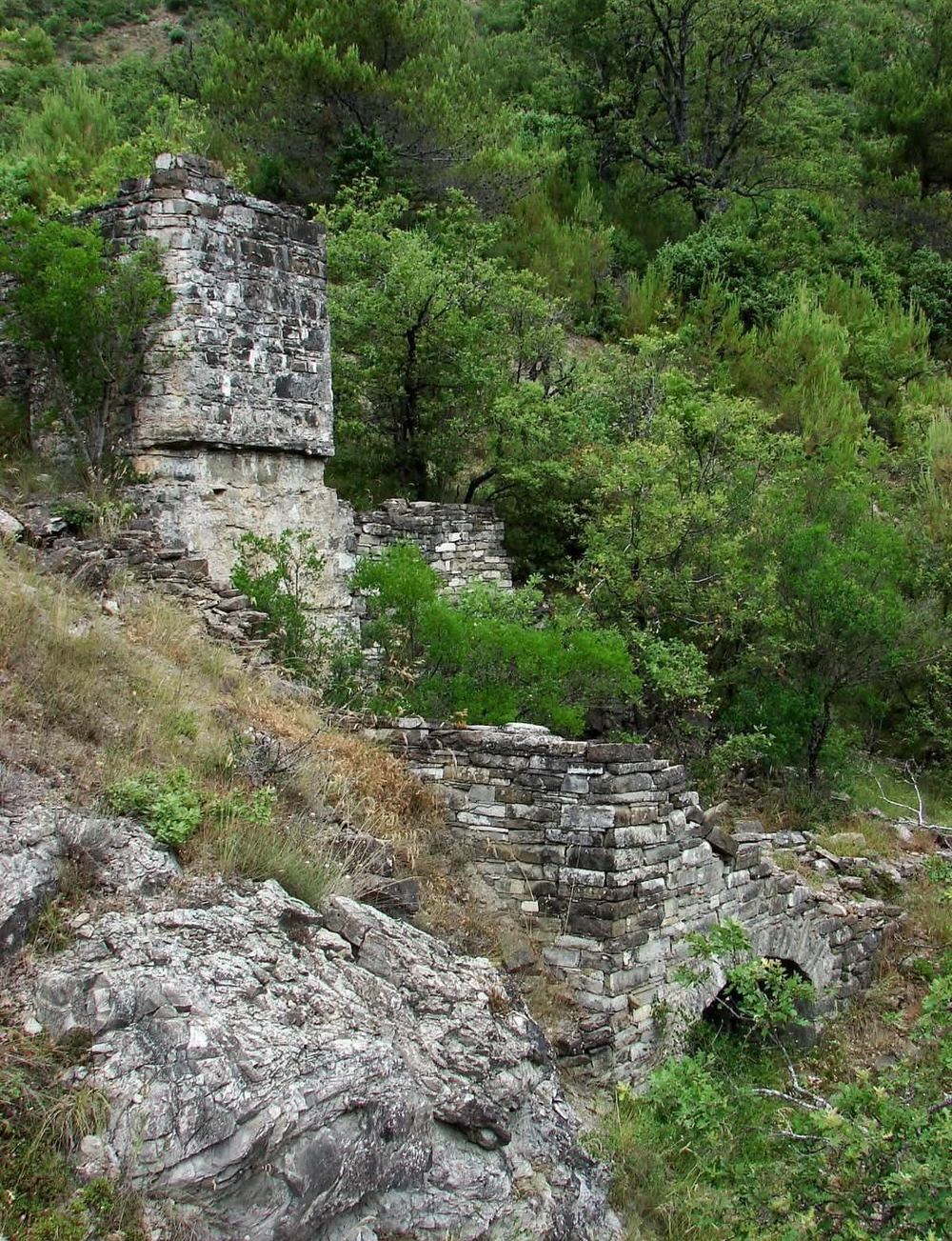
Italy is often celebrated for its art, in the quiet Calabrian mountain town of Alessandria del Carretto, its history isn’t just in museums or books; it lives in the stones, the hills, and the stories passed down by families through generations. This past August, living history took on a deeply meaningful form with the unveiling of the Gilorma Memorial, a tribute to eight villagers who lost their lives more than a century ago in the Gilorma Mill landslide. For a town shaped by resilience, the memorial stands as both remembrance and reminder.
The ceremony felt unmistakably intimate, heartfelt, and grounded in community. Villagers gathered alongside descendants of those lost in the tragedy. There was a shared understanding that this was more than an event; it was an obligation, a moment to honor the people whose lives and sacrifices helped shape the village’s identity.
Mayor Domenico Vuodo opened the ceremony. He didn’t speak as a politician, but as a fellow son of the village. “We remember not only the pain,” he said, “but also the strength of those who endured this tragedy.” In that short, simple statement, he captured the spirit of Alessandria del Carretto, a place where dignity and endurance are woven into everyday life.
Professor Alessandro Arvai followed with a deeper historical perspective. His remarks were not academic, but real stories, preserved accounts of the landslide, the victims, their families, and the village as it existed in the late 19th century. He described the mill, the terrain, the conditions that led to the disaster, and the daily lives of those who worked there. But he also spoke of the people themselves: their hopes, their labor, and the families they left behind. His words gave shape to the names etched into the memorial plaque, transforming them from distant figures into fully realized lives.
For me, the memorial carries personal weight. Among the eight victims was my great-uncle, Alessandro Arvia. I wasn’t born in Alessandria, but my paternal grandparents were, and the town has always felt like the starting point of my family’s story. Listening to Professor Arvia’s account, I felt the pull of heritage, the way a single event, even one that occurred long before my lifetime, can still shape identity and belonging.
What makes the memorial even more remarkable is how it came to be. Funded entirely through private donations from descendants now living abroad, it reflects a shared devotion to honoring the past. Distance has not weakened the bond people feel to this village. Alessandria del Carretto’s sons and daughters, whether living in the town or thousands of miles away, remain connected through memory.
Today, the memorial stands not only as a marker of this 1896 tragedy, but as a testament to unity. It reminds us that communities are strengthened not just by joyful moments, but by the way they confront sorrow together. In honoring these eight villagers, Alessandria del Carretto pays tribute to the endurance, courage, and spirit that continue to define it.
-
 Photos courtesy of...
Photos courtesy of...
Photos courtesy of...
-
Photos courtesy of...
Photos courtesy of...
-
Photos courtesy of...
Photos courtesy of...
https://www.lagazzettaitaliana.com/history-culture/10884-a-monument-of-memory#sigProId0ced36d07a