Camminare lungo la Via Francigena, dal confine svizzero fino a Roma, mi ha offerto uno sguardo raro sull’Italia che va oltre le mete turistiche più conosciute. Lungo il percorso, le feste dei piccoli borghi, l’accoglienza della gente del posto e le conversazioni sulla comunità, sull’immigrazione e sulle difficoltà che affrontano le giovani generazioni mi hanno rivelato un Paese profondamente legato alle proprie tradizioni, ma al tempo stesso attraversato da cambiamenti significativi. Il viaggio è stato molto più di un pellegrinaggio: è stata un’occasione per scoprire il cuore dell’Italia attraverso le persone che la chiamano casa.
For the past few years, I have spent part of my summers walking various pilgrimages. This year, I chose to walk the Italian portion of the Via Francigena, beginning at the Swiss border and continuing to Rome. It was roughly a 600-mile trek.
The complete Via Francigena (also known as the road that comes from the land of the Franks) is an exhausting, and I do mean exhausting, 1,900 miles from Canterbury, England, to Rome, Italy. Particularly devout pilgrims can continue on to Apulia, where they can board a ship to complete their pilgrimage in the Holy Land. Although it is unknown when pilgrims first started walking this route, Willibald, Bishop of Eichstätt, documented it in 725 AD. Since then, the routes that make up the Via Francigena have changed many times. Unfortunately, many are not well paved. While pilgrims sometimes walk on ancient Roman roads or gravel paths, they also find themselves fording streams, braving rope bridges, and hacking their way through thorny brush. As daunting as some of this may sound, the only thing to really fear is the packs of wild boar which I encountered once or twice. It is, to say the least, an adventure.
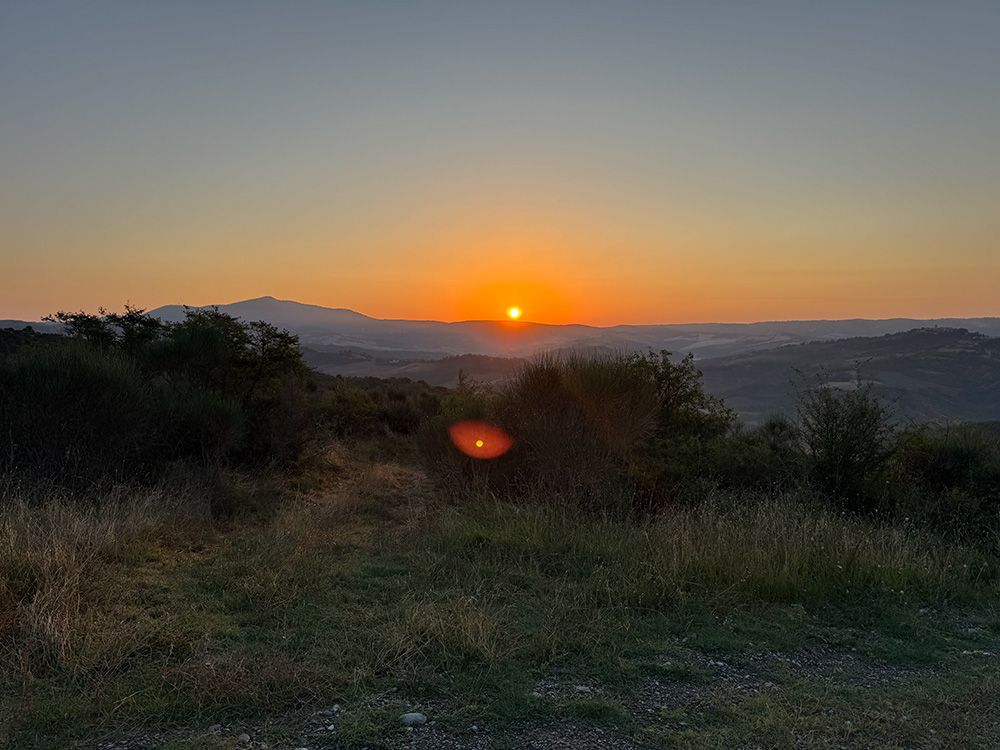
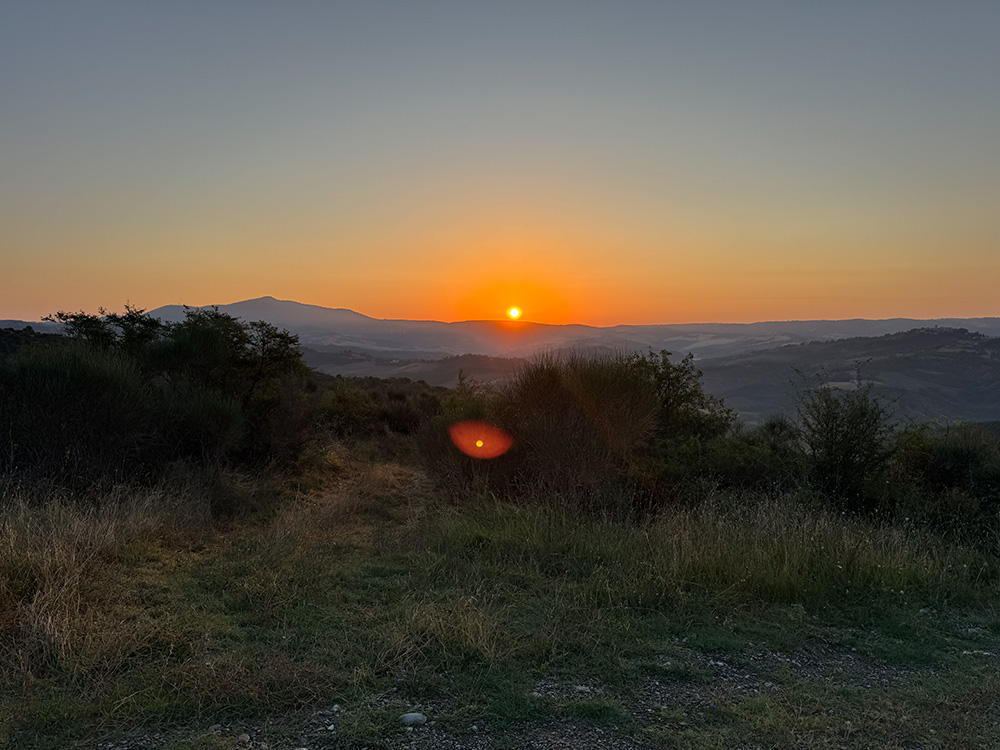
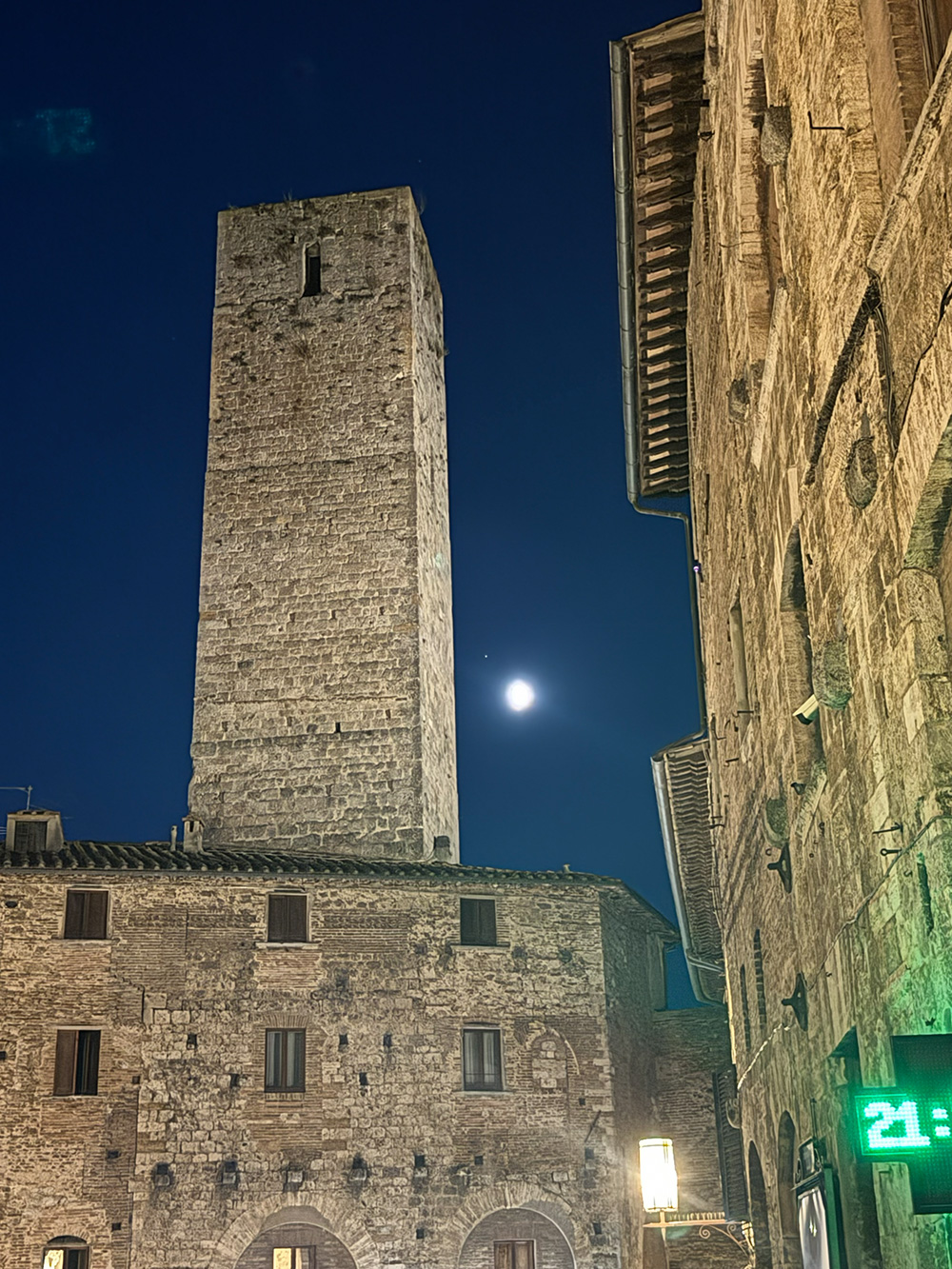
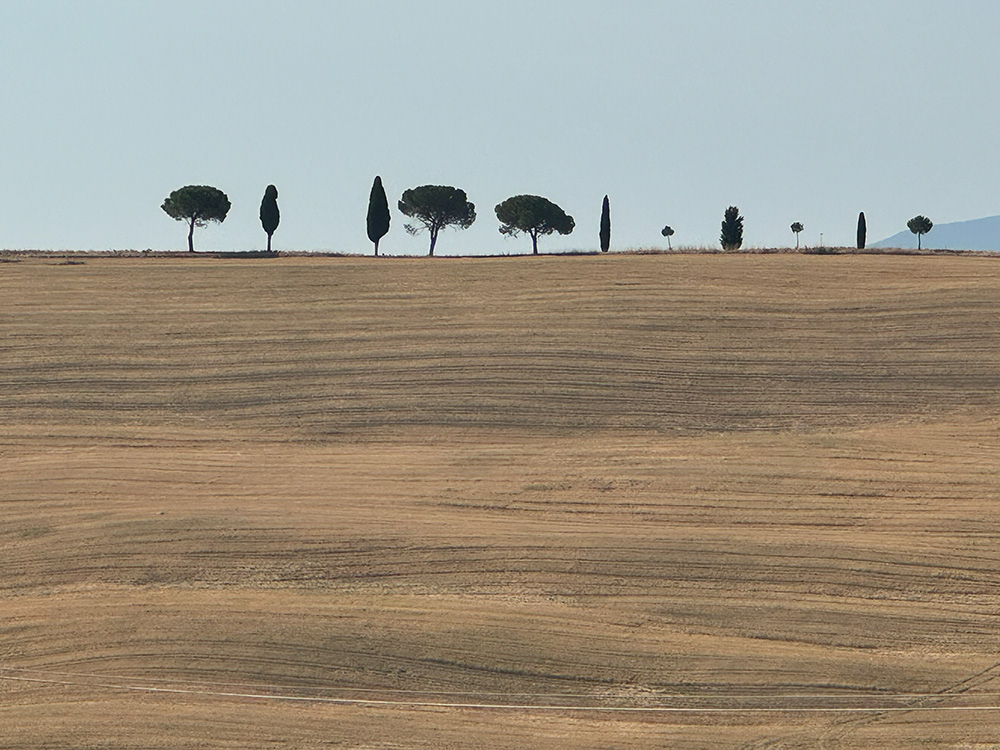
I chose the Via Francigena to experience the true Italy, the Italy beyond the typical tourist destinations. You don’t have to walk 600 miles to learn the Italian countryside is beautiful and the food delicious. This is well-known worldwide. What I wanted to know was the Italian people. What are their lives like? What were their hopes and fears? How do they see Italy and its place in the world? This was the beauty of the Via Francigena. It took you from one small town to another, some of which had fewer than a thousand people.
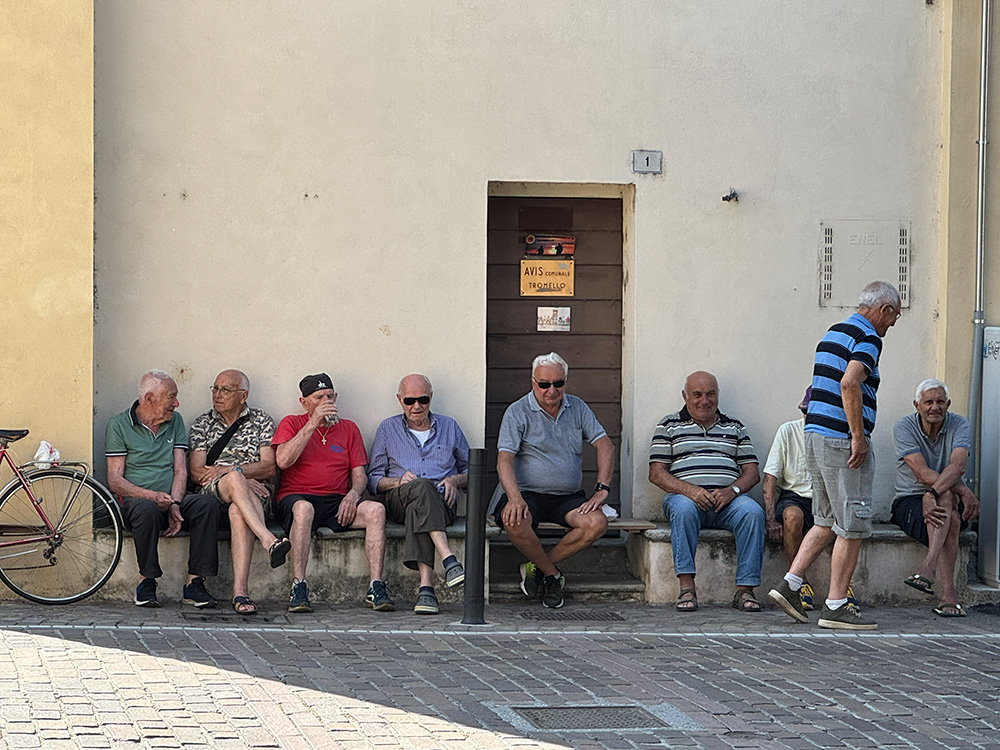
One of the first things I learned was their sense of community. It seemed that every town through which I passed had some sort of celebration, especially on the weekends. In Berceto, a children’s festival filled the main piazza, with singing and dancing that lasted well into the night. In Saint Andrea Bagni, the entire town turned out for a concert that evolved a huge party with plenty of food and drink. I saw community in more than just the parties. I would see groups of old men sitting outside cafés, drinking espresso, talking. Clusters of grandparents sitting in parks watching their grandchildren at play. I saw the truth of the saying that the piazza is the Italian open-air living room. It is where the community’s daily life unfolds, where neighborhood news (gossip?) is shared, and where social bonds are forged.
Most importantly, my experience with the Italian people shattered the stereotype of the boisterous, loud Italian. The Italians I met in these small towns were extraordinarily polite and welcoming, quick to assist a lost pilgrim. If a local happened to see me head off in the wrong direction, they set me aright. When they noticed the pilgrim symbol I carried, they encouraged me on my walk, asking where I started, how long I had been walking, and where I was from. On particularly hot days, they would offer me something cold to drink or fruit from their gardens. They were, almost universally, good, kind people.
The goodness of these people caused my heart to ache. Although Italy is the eighth-largest economy in the world, many of the areas through which I passed are struggling. One woman described how people live modestly, just getting by. “You won’t see big, expensive homes or shiny new cars,” she told me, ”there is no opportunity for young people here.” I saw this to be true. Servers and taxi drivers with college degrees believed that they had no future in Italy. Almost every young person with whom I spoke told me their dream was to come to America.
This exodus is changing Italy. To replace the workers they are losing, immigrants are flowing into Italy from all over the world. I was surprised to see stores and restaurants run by Asians who spoke unaccented Italian so fluently that I envied them. People from the Middle East and Africa were in every town. Even the smallest of towns had a couple of Chinese or Japanese restaurants. I saw so many pizza/kabob shops that I genuinely believe that in the not-too-distant future, Kabobs will be considered an Italian food. I asked one local how he felt about all the immigrants coming into Italy. “As long as you are willing to integrate into our culture,” he said, “you are welcome.” From what I saw of the friendly relations between the different groups, most Italians I met felt the same way.
Although Italy is changing, the core of Italian culture remains. But to experience that culture, you need to get beyond the big cities and tourist locations. I encourage people, especially Italian Americans, to go on one of the many Italian Pilgrimages. Rather than walk the entire Italian portion of the Via Francigena, you can do a small section or one of the other walks in Italy, such as the Steps of Saint Francis. If you don’t enjoy walking, you can also drive some of these routes. Walk or drive, when you plan your next trip to Italy, make it a point to get where the tourists don’t.
https://www.lagazzettaitaliana.com/travel/10913-the-via-francigena#sigProId6c05e0cf0e
All photos courtesy of Bill Giovinazzo