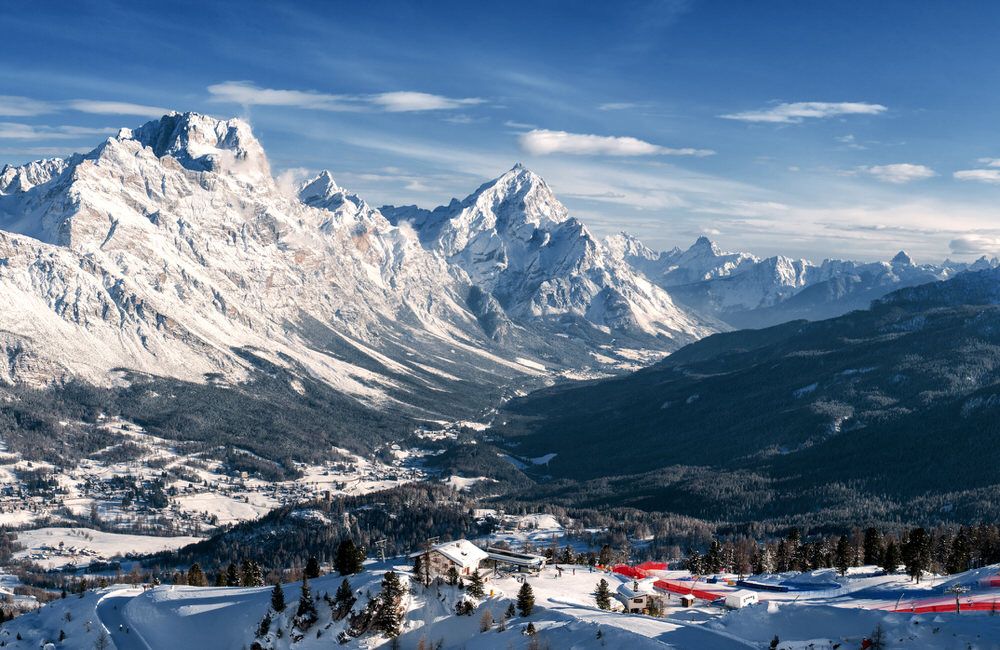
In alto, tra le frastagliate vette delle Dolomiti, dove le cime si tingono di rosa al tramonto e le campane risuonano nell’aria frizzante di montagna, Cortina d’Ampezzo appare al tempo stesso senza tempo e cosmopolita. Da oltre un secolo, questa celebre località alpina attira atleti, aristocratici, artisti e viaggiatori, tutti affascinati dalla sua rara combinazione di paesaggi spettacolari e raffinata sobrietà. Con il ritorno delle Olimpiadi Invernali nel 2026, Cortina torna ancora una volta sotto i riflettori internazionali — non come un resort artificiale, ma come una comunità alpina viva, la cui identità è plasmata dalle montagne, dalla tradizione e da un innato senso dello stile.
Tucked into the heart of the Dolomites in northern Italy, Cortina d’Ampezzo has long been synonymous with alpine elegance. Known as the “Queen of the Dolomites,” the mountain town blends dramatic landscapes, deep sporting tradition, and refined Italian style. In recent years, especially with the 2026 Winter Olympics, Cortina has once again found itself on the world stage, balancing global attention with its carefully preserved local identity.
Cortina sits at 1,224 meters (three quarters of a mile) above sea level in the Veneto region, surrounded by some of Europe’s most striking peaks. The Dolomites, a UNESCO World Heritage site, define both the town’s skyline and its culture. For centuries, Cortina was a Ladin-speaking alpine community; its history reflects a blend of Italian, Austrian, and Tyrolean influences, visible in its architecture, cuisine, and traditions.
The town’s modern international identity dates back to the 1956 Winter Olympics, the first Games ever broadcast on television. That moment transformed Cortina from a quiet mountain village into a symbol of glamorous winter tourism, a reputation it still carries today.
Cortina is one of Italy’s most important winter-sports hubs. It is particularly famous for alpine skiing, hosting regular World Cup races on the legendary Tofana slopes. Italian skiing icons, from past champions to current stars, have raced here, and the town is closely linked to the country’s alpine sporting legacy.
Beyond skiing, Cortina is known for bobsleigh and sliding sports, with the historic Eugenio Monti track, ice hockey, a key part of local sporting life, and climbing and hiking, which draw visitors year-round, not just in winter.
With the Milano-Cortina 2026 Winter Olympics, the town returned to its Olympic roots, hosting marquee events and reaffirming its place as one of Europe’s premier mountain venues.
Unlike purpose-built ski resorts, Cortina is a living town, not just a seasonal destination. Its pedestrian main street, Corso Italia, mixes luxury boutiques with family-run cafés, while local markets and festivals preserve a strong sense of community.
Cortina’s cultural life reflects its alpine heritage. Cortina hosts traditional Ladin festivals and costumes annually. Its cuisine blends mountain fare like polenta, game, and cheeses with Venetian influences. Cortina has a strong emphasis on craftsmanship, from woodwork to fashion.
This balance between luxury and authenticity is central to Cortina’s appeal. Celebrities and royalty may vacation there, but so do generations of Italian families who return every year.
Hosting the 2026 Winter Olympics brought investment, infrastructure upgrades, and renewed global attention, but also sparked debate. Some residents and environmental groups raised concerns about sustainability, construction impacts, and the long-term legacy of Olympic development in a fragile mountain ecosystem.
Local authorities emphasized a “light” Olympic footprint, reusing venues where possible and focusing on long-term benefits rather than one-time spectacle. The conversation reflects a broader question facing many alpine communities: how to welcome the world without losing what makes the place unique.
Even as cameras and crowds come and go, Cortina remains rooted in its landscape. In summer, ski runs turn into hiking paths, cliffs attract climbers from across Europe, and the town slows into a quieter rhythm. The mountains are not just scenery; they shape daily life, work, and identity.
Cortina d’Ampezzo represents a particular vision of Italy: outward-looking yet tradition-minded, glamorous yet grounded. From its Olympic past and present to its enduring mountain culture, the town stands as a reminder that Italy’s story is not only written in its cities and coastlines, but also high in the Alps.
As the world’s attention fades after the Games, Cortina will continue doing what it has done for generations – living with the mountains, on its own terms.