Da oltre 150 anni, Pastene porta i sapori dell’Italia nelle cucine italoamericane, unendo generazioni attraverso il cibo, la famiglia e la tradizione. Dalle umili origini di Luigi Pastene, che vendeva frutta e verdura da un carretto ambulante nel North End di Boston, fino all’azienda familiare oggi guidata dalla quinta generazione, la storia di Pastene è fatta di perseveranza, orgoglio e amore per la buona tavola. Una conversazione con Mark Tosi, amministratore delegato dell’azienda, rivela come Pastene continui a onorare le proprie radici di immigrati, tramandando la sua eredità alle generazioni future.
For generations, that familiar red-and-yellow Pastene label has been part of Italian American kitchens and tables. Tomatoes, olive oil, pasta, grated cheese and olives, it is a name many of us grew up with.
For me, it was always the tomatoes, the only ones my Nonna and Mamma used for their sauces and Sunday gravies. Even today, a glimpse of that can brings me back to their kitchens. I can almost smell the gravy simmering and feel the memories it holds.
And I know I’m not alone. Pastene means more than what is inside the can. It is tied to our families, our traditions and the foods we grew up eating.
Still family-owned and led by fifth-generation owner and CEO Mark Tosi, Pastene has endured world wars, the Great Depression and a pandemic. In 2025, Massachusetts honored its legacy by designating October 17 as Pastene Day.
But before those products reached our kitchens, there was an Italian immigrant and a pushcart in Boston’s North End. And that is where I wanted to begin.
Sitting around the table with Mark, I asked him to take me back to his family’s beginnings. Luigi Pastene arrived from Genoa, Italy in 1848, selling fresh fruits and vegetables from a pushcart. Despite competition, he kept pushing it for years, even throughout the Civil War.
His son Pietro, born and educated in Boston, worked in shipping and founded Pastene in 1874. He recognized that Italian immigrants were missing ingredients to prepare the foods of home. Using his overseas connections, he imported olive oil, followed by cheese, which traveled well across the Atlantic.
The company settled on Fulton Street among other Genoese families. “That’s where the Genovese people were,” Mark said. “They all stayed together.”
Getting products beyond Boston was another challenge. Laughing, Mark described salesmen taking trains to Albany, renting horses and riding out to customers. Delivering the food was another undertaking. “It took a long time to get product.”
Luigi found a way to build a life. Pietro carried it forward, bringing familiar foods to families making America their home.
Pastene changed with the times. Mark showed me cookbooks from the 1930s and ’40s featuring fruit cocktail, green beans, coffee, olive oil and fish. Some products disappeared; tomatoes became a mainstay. Others came full circle, like the fish now enjoying renewed popularity as “tinned fish.”
Mark’s own path took him to Italy. After Ithaca College, he studied Italian in Florence, then moved to Castello di Gabiano, an 11th-century castle and winery. He traveled, learned about food and wine and visited suppliers.
Wine was then central to the business. His father’s connections included Robert Mondavi. “My father and Robert Mondavi were close,” he said. “Pastene was the first distributor in the United States for Robert Mondavi.”
Returning to Boston, Mark sold wine to restaurants and hotels, including those in the North End, meeting people face to face, as generations before him had.
Another milestone was Kitchen Ready Tomatoes, introduced in 1965, peeled and ground to make cooking easier. “It became our number-one-selling tomato,” Mark said. “Everybody uses them, and everybody loves them.” Today, they come from California, while Pastene’s DOP-certified tomatoes come from Italy.
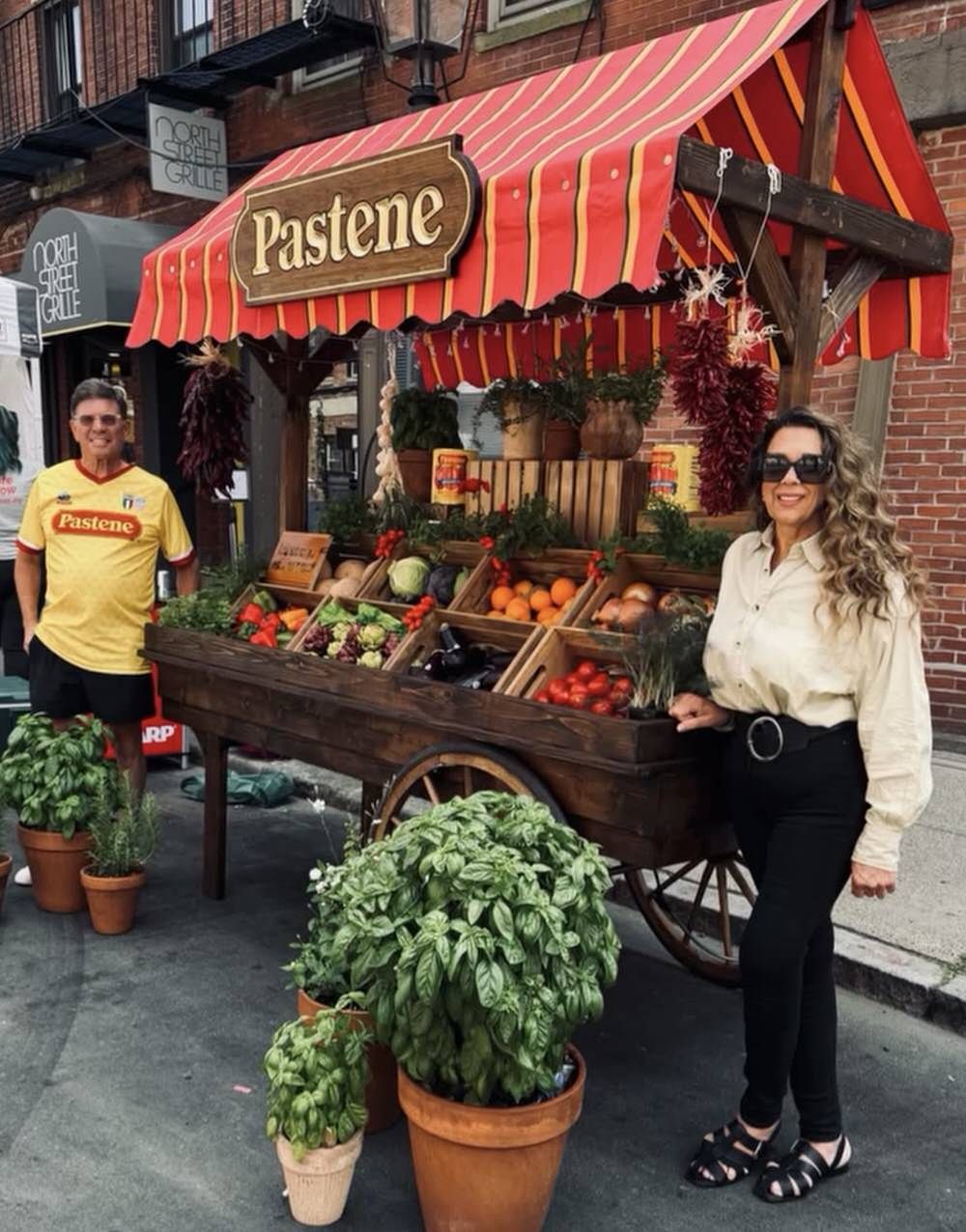
For the company’s 150th anniversary, Mark recreated Luigi’s pushcart. Seeing it meant something special to me; one immigrant’s beginning, and a family still carrying his name more than 150 years later.
How had this family kept both their business and their bond strong for more than 150 years? “Mark, what do you believe has been the greatest attribute to Pastene’s success?” He didn’t hesitate. “I’m fifth generation. My son and daughter, who work here, are sixth generation, and next month, the seventh generation will be born.”
For Mark, it comes down to pride. “My family and I love food, we love this business, and we take great pride in the products we produce.”
The sixth generation works beside him. The seventh is about to begin. Maybe that says more about the legacy than anything else.
Before I left, Mark spoke about getting people back into the kitchen. Opening the tomatoes. Pouring the olive oil. Making the sauce. Bringing families around the table, as our Mammas and Nonnas did. Because preserving a legacy means helping the next generation understand what was placed in their hands as well as how to carry it forward.
He also shared something that brought our conversation full circle. Pastene is finding its way back to the North End, with something lasting to honor its beginnings and the neighborhood it never forgot.
No matter how far we travel or how many years pass, the place where our story began will always be home. For Pastene, that place is Boston’s North End, the neighborhood they never forgot and are now finding their way back to.
And maybe that is what legacy really is, remembering where we came from, honoring those who came before us and carrying what they left us into the next generation.
Because in Boston’s North End, tradition is not recreated. It is lived, protected and passed from one generation to the next.