How close are you to your immigrant past? When I was a grade schooler, going shopping at Youngstown’s department stores with family was always a special occasion. But on one particular day I came home with more than new clothes — I came home with a concept of the past. City work crews had opened a hole in front of the popular McKelvey’s. We were close by, so my father easily directed my attention to what the workers were exposing: the rails of the once extensive streetcar network he knew as a child. Immediately, I saw another world revealed beneath our feet, a lost one of intercity rail travel that had existed for decades. What a revelation! What else lay in the past beyond my everyday eyes? How far did the past go?
Further questioning led me to grasp that the past, though hidden, continued to exist. All that was needed was some digging — in the form of questioning. As further proof there was a past, Grandpa Lariccia gave me a coin with the image of Vittorio Emanuele, the first King of Italy. Soon I began to ask questions. Why were there so many Italians in the United States? Decades of searching, reading, and even writing followed, including here at La Gazzetta Italiana.
By the early 1920s, both sets of grandparents had immigrated to the U.S., committing to staying and building families here. They had turned their backs on the country of their birth, the Kingdom of Italy, which had formed in 1861. Nonno and Nonna were really the first generation to be born in the newly united Italy. Curiosity led me to understand that the innovations resulting from Italy’s founding explained why so many Italians began leaving their brand-new country for America.
What I learned from this particular topic of history changed my understanding of our immigrant origins. The relationship between people and the land, for one, underwent a profound change after Italy unified, especially in the Mezzogiorno, Italy’s south. The new government retired the old economic system, feudalism. It had been dominated by barons, princes, counts, bishops, dukes, and other elites whose power rested on land ownership and a tradition of strict loyalty between powerful and underlings. Unpaid labor and conscription into local armies were burdens that fell upon ordinary people. The relationship, however, did come with one important benefit, access to land.
The newly constituted Kingdom of Italy made a deliberate shift away from feudalism, adopting capitalism to modernize the country and foster freedom. The market now determines everything relating to business and money, especially real estate. To increase tax revenues the new government broke up many landed estates, selling them to buyers who had cash. Religious properties and village commons were auctioned off. In southern Italy, 25 percent of tillable land was privatized by the new government.
But these fields and forests were often those that had been available for landless peasants to use under the old system. This form of use — usu fructu, in legal terms – made land available to the peasantry for farming, grazing of livestock, gleaning, and the collection of firewood. While the feudal legal status of the poorest farmers put them at the bottom of the social ladder, they at least had guaranteed access to land that enabled them to survive.
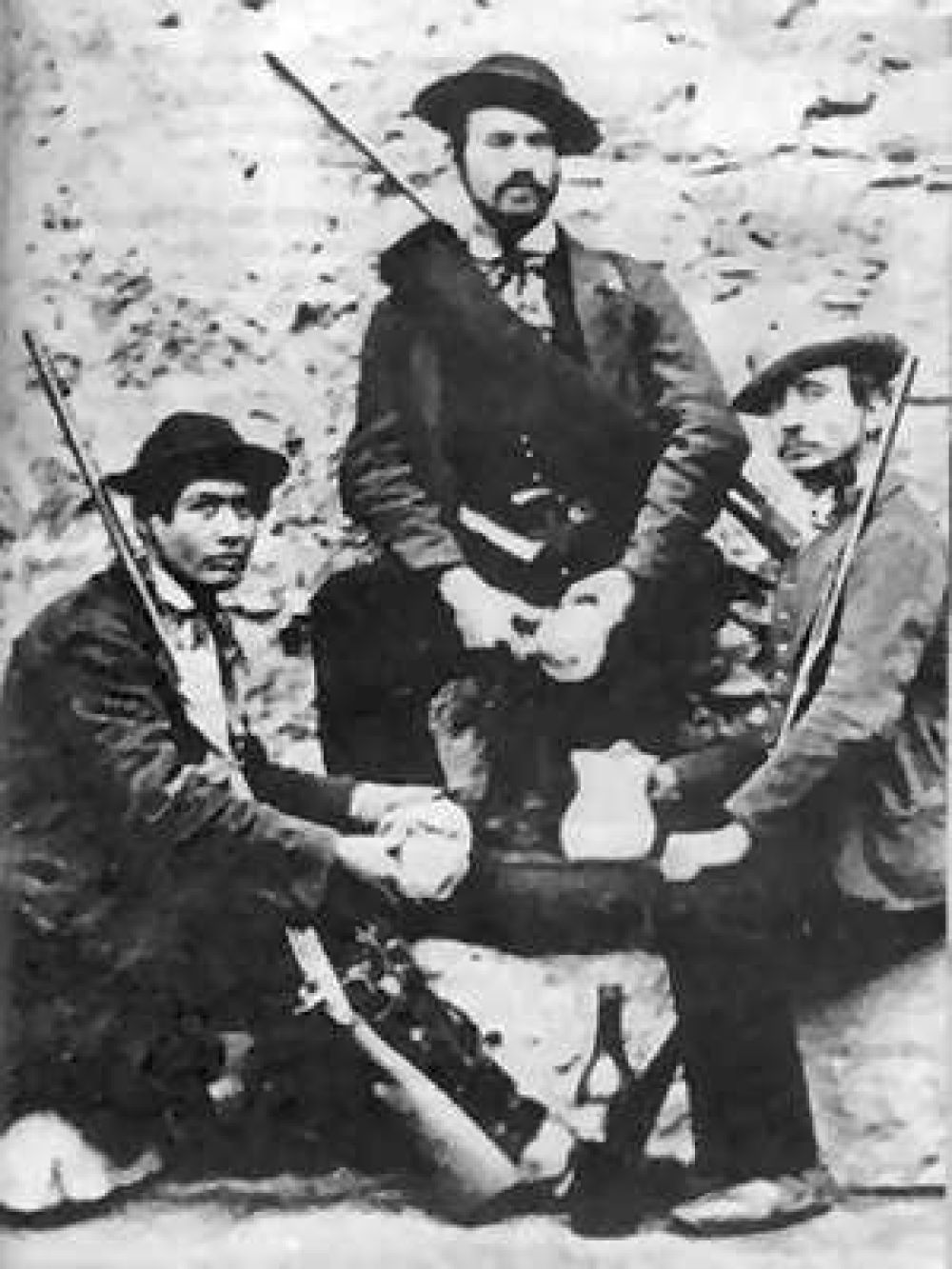
While many benefited from Italian Unification, the process was a bitter pill for the lower end of the social order. The reaction came almost immediately from the dispossessed. A decade of social chaos ensued. Many peasants, now landless, took to the hills and forests where they conducted raids against the new Kingdom of Italy. These briganti swooped down kidnapping officials and attacking the estates of officials participating in the government. In response, the national government deployed troops to brutally occupy Southern Italy, the center of the fiercest rebellion.
The conversion of land into a commodity, something easily bought and sold, allowed peasants with cash reserves to buy acreage. But many, now landless, believed concocted stories and false advertising about the ease of finding work outside Italy. They took out loans to buy steamship tickets. Italians left Italy first for Argentina and then for the United States. Other factors, such as the lack of industrial employment and crippling taxes, contributed to this flight. Also, the introduction of cash crops converted sheep pastures to agriculture fields, leaving many shepherds jobless, including my mother’s father.
My own family history intertwines with these events of long ago, and many others can say the same. My maternal grandfather, a former shepherd in Molise, quit the declining sheepherding industry, making at least three trips to the U.S. He eventually put down stakes in Youngstown, where he became a steelworker.
There are many topics from our history as a people with immigrant roots. You’ll often find them here in the pages of La Gazzetta. Be assured that though the past may be hidden from everyday life, a little digging in the way of questioning and reading has the power to open a forgotten world.