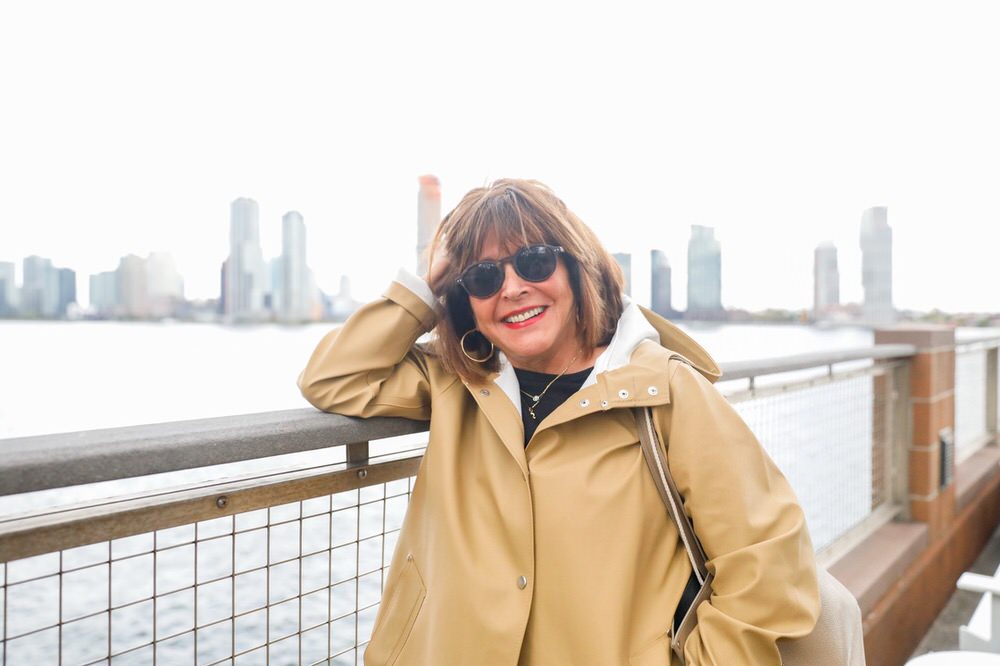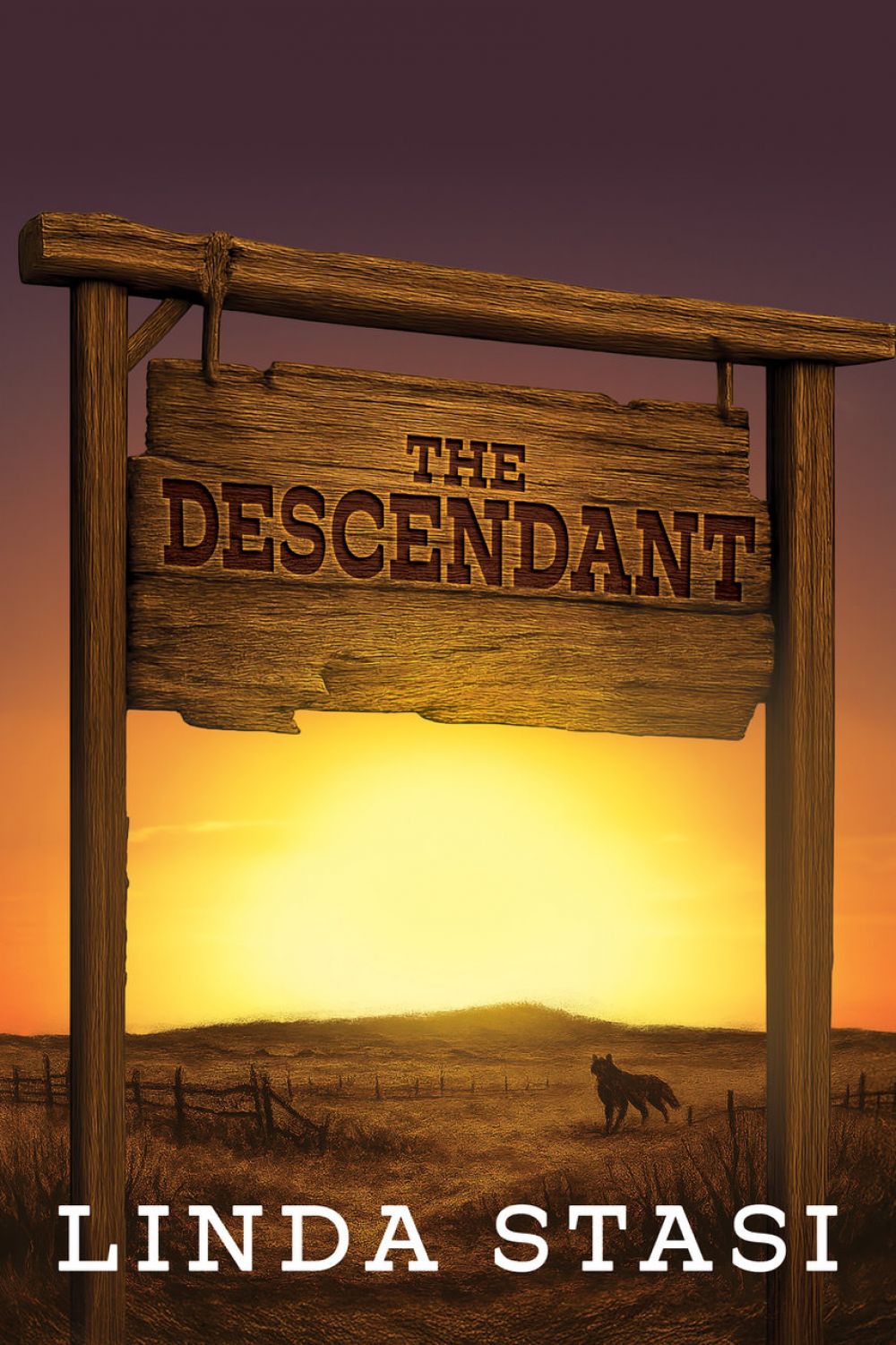
Award-winning journalist, bestselling novelist, and former New York Daily News and New York Post columnist Linda Stasi – once named one of the “Fifty Most Powerful Women in NYC” – brings her trademark bold, fearless storytelling to her most ambitious work yet: “The Descendant” (Regalo Press, March 10, 2026).
This based-on-real-events novel tells the story of the family that possibly inspired “The Godfather” – except this story doesn’t begin with a small robbery in New York. Instead, “The Descendant” begins with a big, blooming love in the tiny town of Lucca Sicula, Sicily. Told through the lives of the strong Italian immigrant women who fought against impossible odds after coming to the American West, this historically inspired narrative introduces a whole cast of fascinating characters.
Mariano Barbera was a strong, powerfully built man who saw tiny 14-year-old Maria Ragusa at her family’s store and was struck dumb. He had to have her, and she wanted him just as badly. Their life together leads the couple and their children from earthquake-ravaged Sicily to bondage and massacre in the mines of Colorado, to cattle ranching in Pueblo to Mafia life on the mean streets of Red Hook, Brooklyn.
This sweeping family saga centers around the Barberas’ 10 children—from their three cowboy bootlegging sons to their seven wildly different cowgirl daughters. First there’s little Flo – born on the night of the wolves, whose own alpha wolf never left her side–as she navigates life alongside her best pal and younger sister, Clara. Then there’s Flo’s many older sisters: Callie who loved and lost; Angie, who loved and left; gorgeous Laura, who loved the wrong man; grouchy but brilliant Helen, who loved many times; and tough-as-nails wrangler Mickey, who loved a woman more than the husband she was forced to marry.
“The Descendant” is the story of how the Mafia began in the West by immigrants fighting to survive in the wilds of the wild west, told through the story of a real life family of scrappy, tough, smart folks who refused to let all the power in the world keep them down.
Linda Stasi is a bestselling novelist, award-winning former New York Daily News and New York Post columnist, and longtime TV co-host of NY1’s What a Week! with Mark Simone. She’s now the book critic of “Uncensored” on CUNY TV and teaches novel writing to journalists at the Newswomen’s Club of NY.
An Interview with Linda Stasi provided by Books Forward:
What inspired you to bring this hidden chapter of Italian immigrant history to light?
I began writing a story about my magical, mystical mother who had a wolf as her pet, and her wild and wondrously rogue first generation cowgirl sisters. But because I am a journalist, I took deep, deep dives into what I’d heard growing up and listening to family folklore. What I discovered, however, was so shocking and so terrifying that I’m still in a state of shock today.
Is it true that your family partly inspired “The Godfather?” How did you discover this?
It started with an old photo that my cousin had of her real grandfather whom I didn’t know existed. Her grandmother, my Aunt Carrie, was married to Carlo “Charlie” Carlino, a third son of Vito Carlino. Charlie was killed when a rival Mafia family drove up to them on a bridge and ambushed them, killing Charlie. Carlino is too close to Corleone to be coincidental. Both father’s first names are Vito.
“The Descendant” is part family history, part historical fiction. How did you balance truth, folklore and storytelling?
It wasn’t me. I really felt that this story was being channeled through me, as the voice and the embellishments of real events just came pouring out of my fingers without prompting from me.
How do you hope readers will see Italian American identity differently after reading your novel?
I call the very easily accepted stereotypical depictions of Italian Americans and the Italian immigration experience “unconscious acceptable bigotry.” And it is this hateful stereotype that I am determined to set right. Readers will learn how, when and why this stereotype was created. The New York Times once called Sicilians: “Sneaky and cowardly descendants of bandits and assassins, [who are] as good as rattlesnakes!’” A Times editorial even stated: “There has never been since New York was founded, so low and ignorant a class among the immigrants who poured in here as the Southern Italians.” The editors further warned that Sicilian children were “utterly unfit—ragged, filthy, and verminous” and should not be educated in public schools “among the decent children of American mechanics.” That and other articles like it allowed Italians to be easily laughed at and scoffed at, and that unconscious easy bigotry is rampant even today in TV shows, movies and books.
Much of this history has been buried or overlooked. What discoveries most surprised you during your research?
The Ludlow Massacre. It is so named because it occurred when John D. Rockefeller Jr. hired the National Guard and a detective agency as his personal militia to “deal” with striking Colorado coal miners. These thugs would ride into the striking miners tent city on a tank with a turret machine gun mounted on top to spray bullets at the strikers. When they discovered that the strikers’ wives and children were hiding under the tents, they poured oil on top, set them aflame and burned them to death. One account has at least 55 women and children killed. When Rockefeller was called to congress to account for it, he basically said they had no right to strike. None of the murderers or Rocky were indicted.
Many of your characters are based on your own family’s stories. Which character felt the most personal for you to write?
The most personal character for me to write was, of course, my mother. Her story stayed with me – the way she had a wolf, or maybe a half-wolf, half-dog, as her constant protector and friend in the wilds of Colorado; how she defied an abusive father and developed psoriasis after he attacked her, despite fighting back tooth and nail; how she rode her mule – and later her horse – to school; and how her love for my father grew, even with the disfiguring effects of her psoriasis. I was especially moved by the story of my father being drafted into the Air Corps (now the Air Force). When he realized he’d be assigned to a fighter plane bombing their own parents’ home country of Italy, my father said, “But Papa, America is our home country.”
The women in your story emerge as central figures of resilience. How important was it for you to highlight Italian immigrant women, who are often left out of the narrative?
It was the most important part of the narrative and the whole reason I began to write this book, which is a complete departure from my other novels. Still to this day Italian women are depicted either as slobs constantly boiling pasta, or mob wives with tacky clothes, big hair, too much makeup and horrible grammar. The facts according to research – Italian American women have higher rates of educational attainment and homeownership than the general U.S. population, with a significant portion of the workforce employed in private and non-profit sectors. However, they are underrepresented in government occupations, and while the community has a higher median household income than the U.S. average, there is a widening gender gap in some areas like homeownership, with women experiencing faster rates of increase.
Mariano is such a complex character. What did writing him teach you about trauma, power, and survival?
My mother wasn’t anyone to ever hold back, so even as a child, she told me about the abuse she and her sisters suffered at her father’s (my grandfather’s) hands and how she fought back and never let him touch her again. Not everyone is born with this inner strength and for her it was what saved her life and made her determined that her children would never suffer the same abuse. Her trauma made her teach us from an early age to never accept abuse or belittlement from anyone. Thus the engraving on her headstone: Nobody is Better Than You.
Most Americans think of Italian immigration through the lens of New York or Chicago. What changes when we shift the focus westward?
Hundreds of thousands of Italians came west with the promise by the robber barons of free land and riches only to find themselves in bondage working 18 hours a day in the coal mines. The fact that they figured out how to get out, and how to fight the power and become cattle ranch owners still astound me to this day.
Why isn’t this part of the regular American story? What lessons do you hope your readers take from your family’s story about resilience, reinvention, and survival?
Like my grandmother taught my mother and my mother taught us: “Nobody is better than you. Nobody!” That means that no matter how people may try to put you down and try to make you believe that they are better, smarter, more “American,” thinner, prettier handsomer, whatever, you must always believe in your own abilities, and your own beauty. With that belief you can conquer any stumbling blocks to overcome.
If your ancestors could read this book, what do you think their reaction would be?
Since I believe they got together on the other side to feed the story to me, I guess you’ll have to figure out how to ask them yourself!